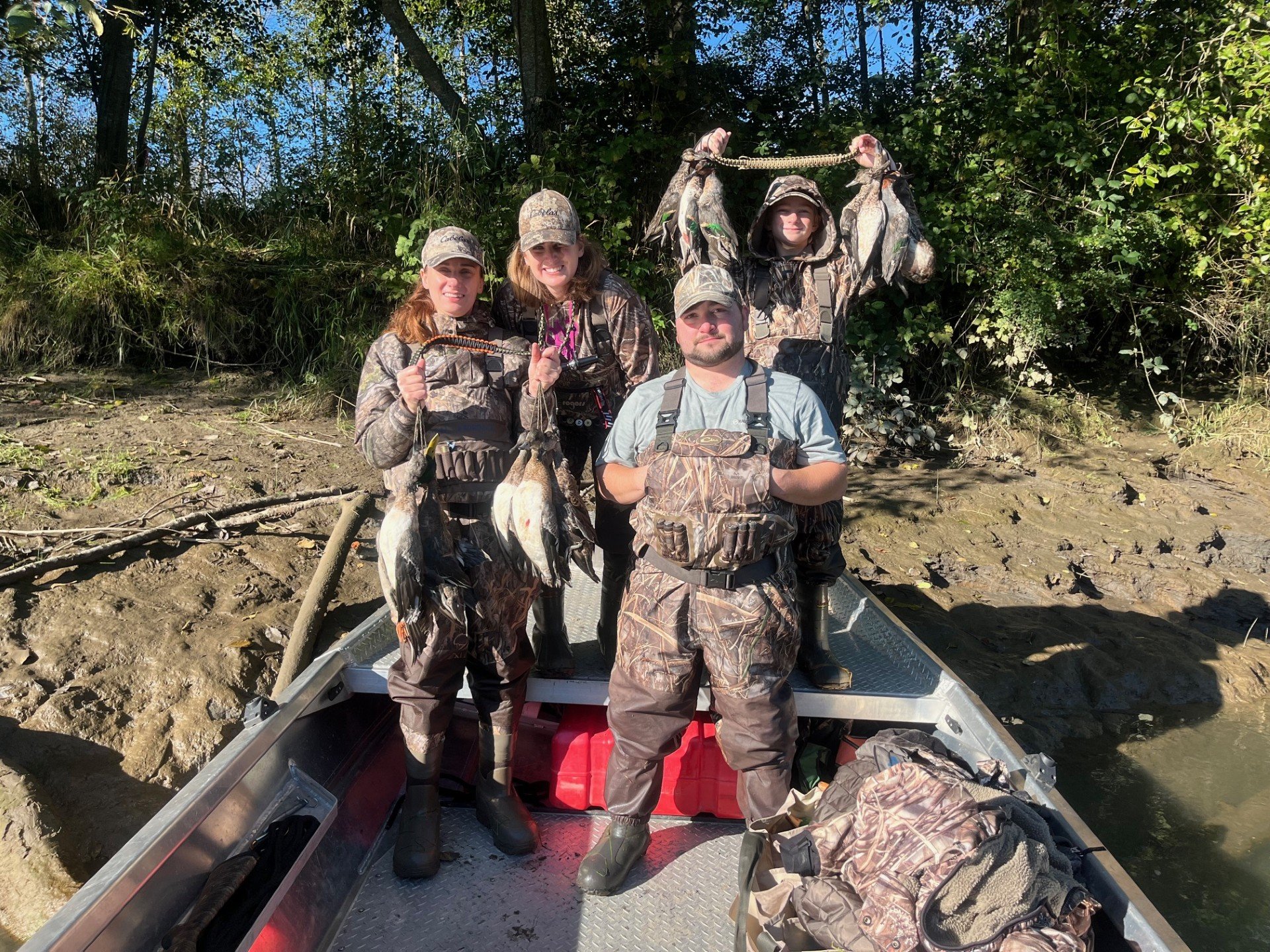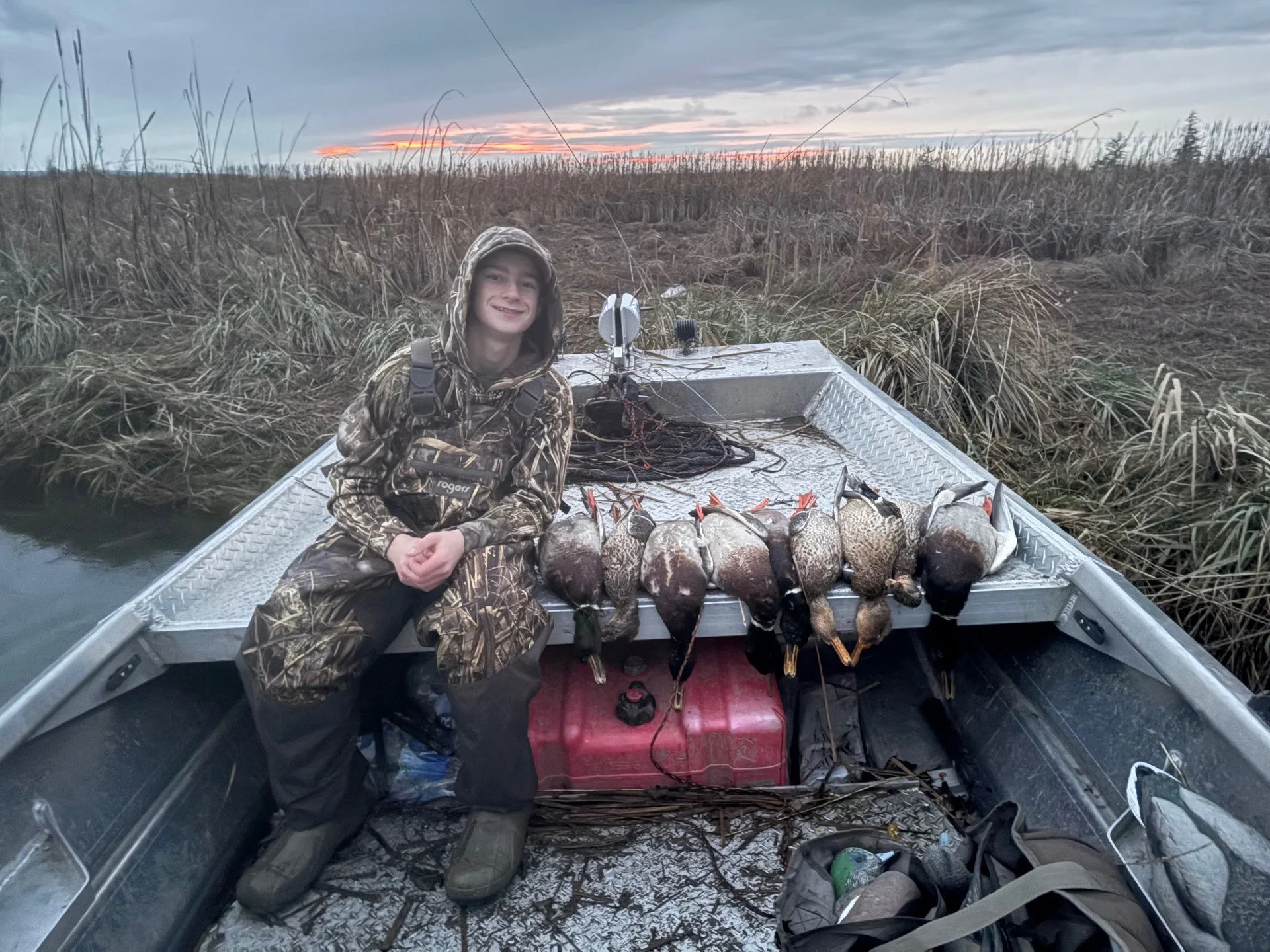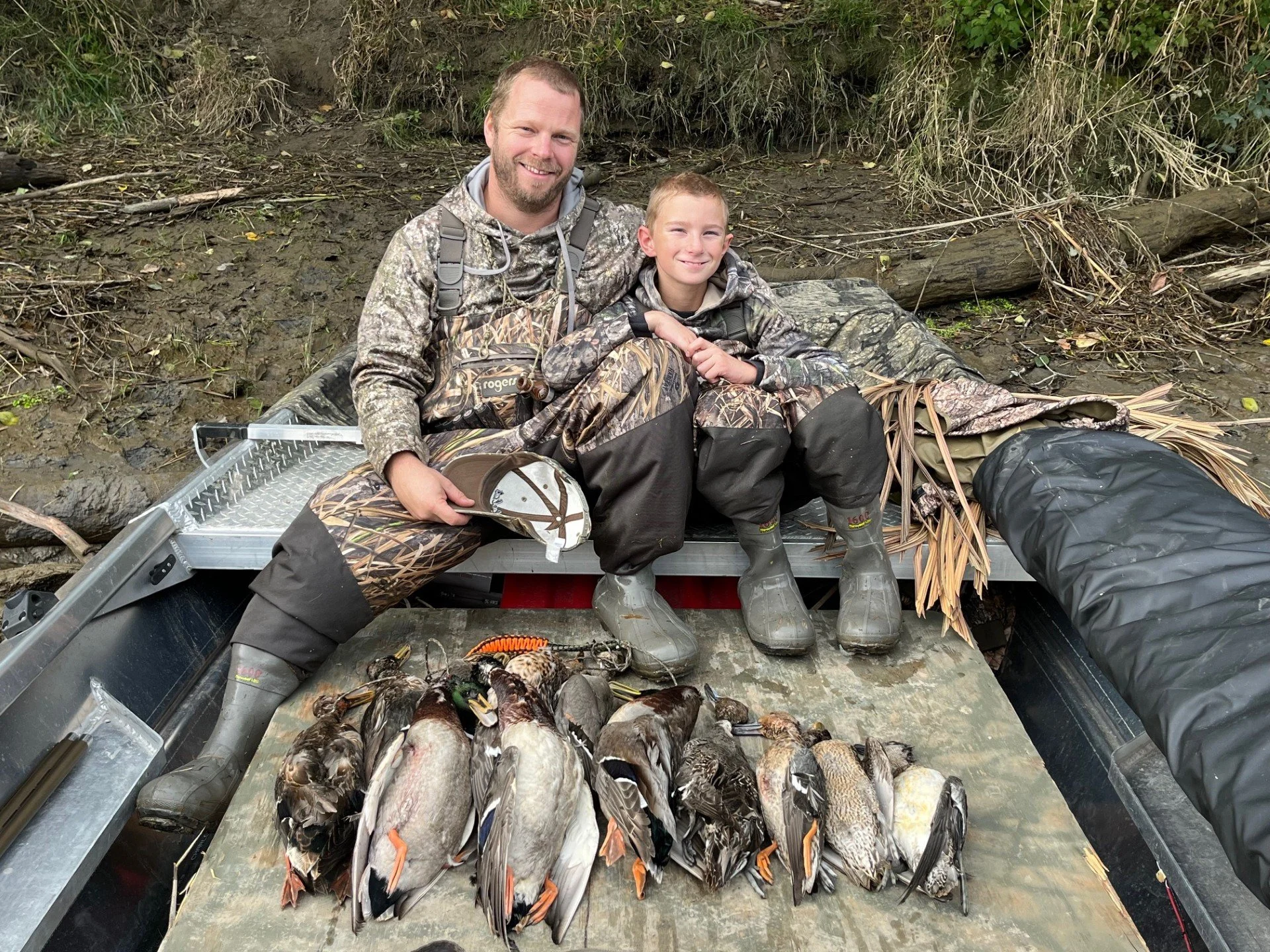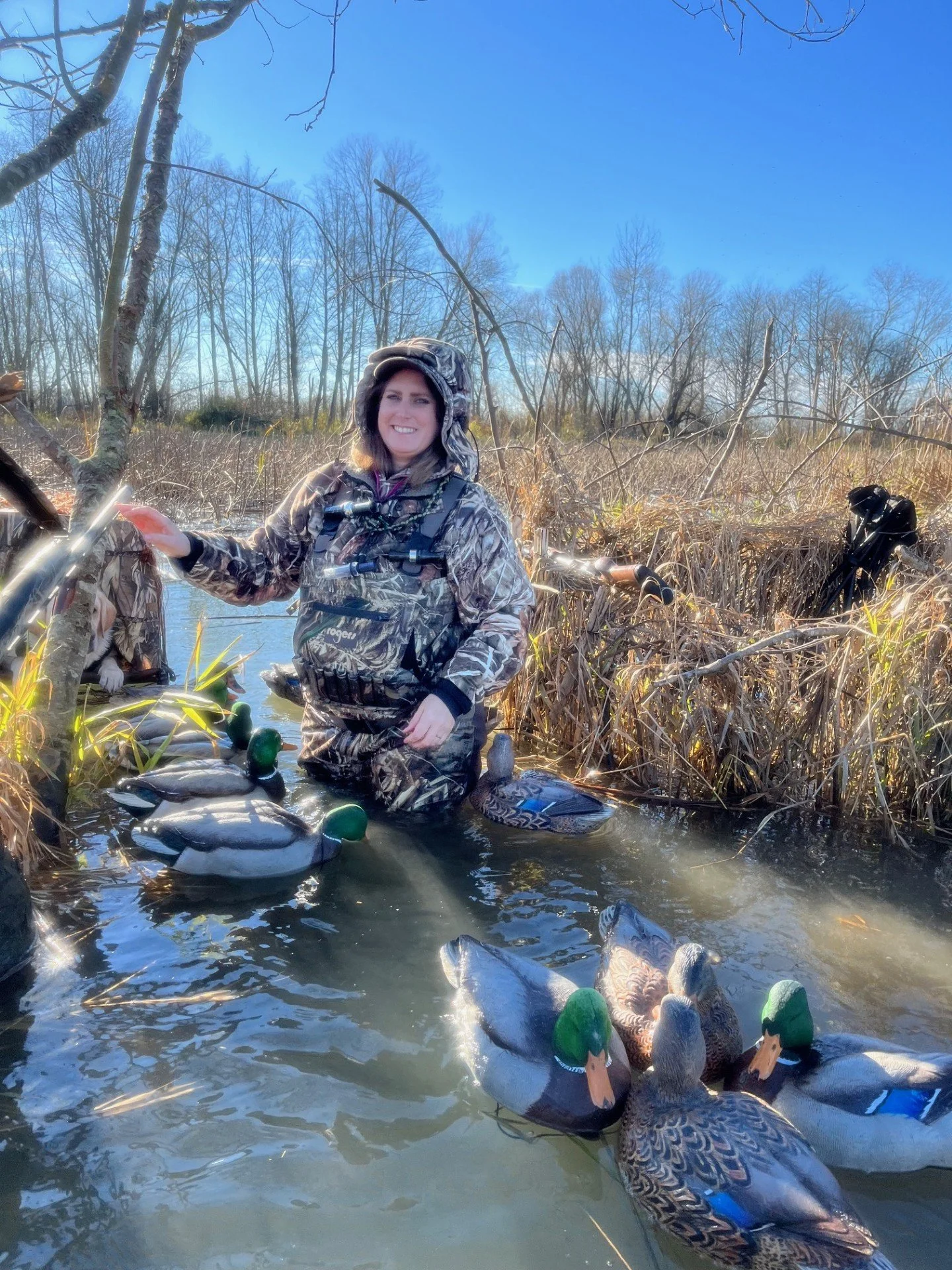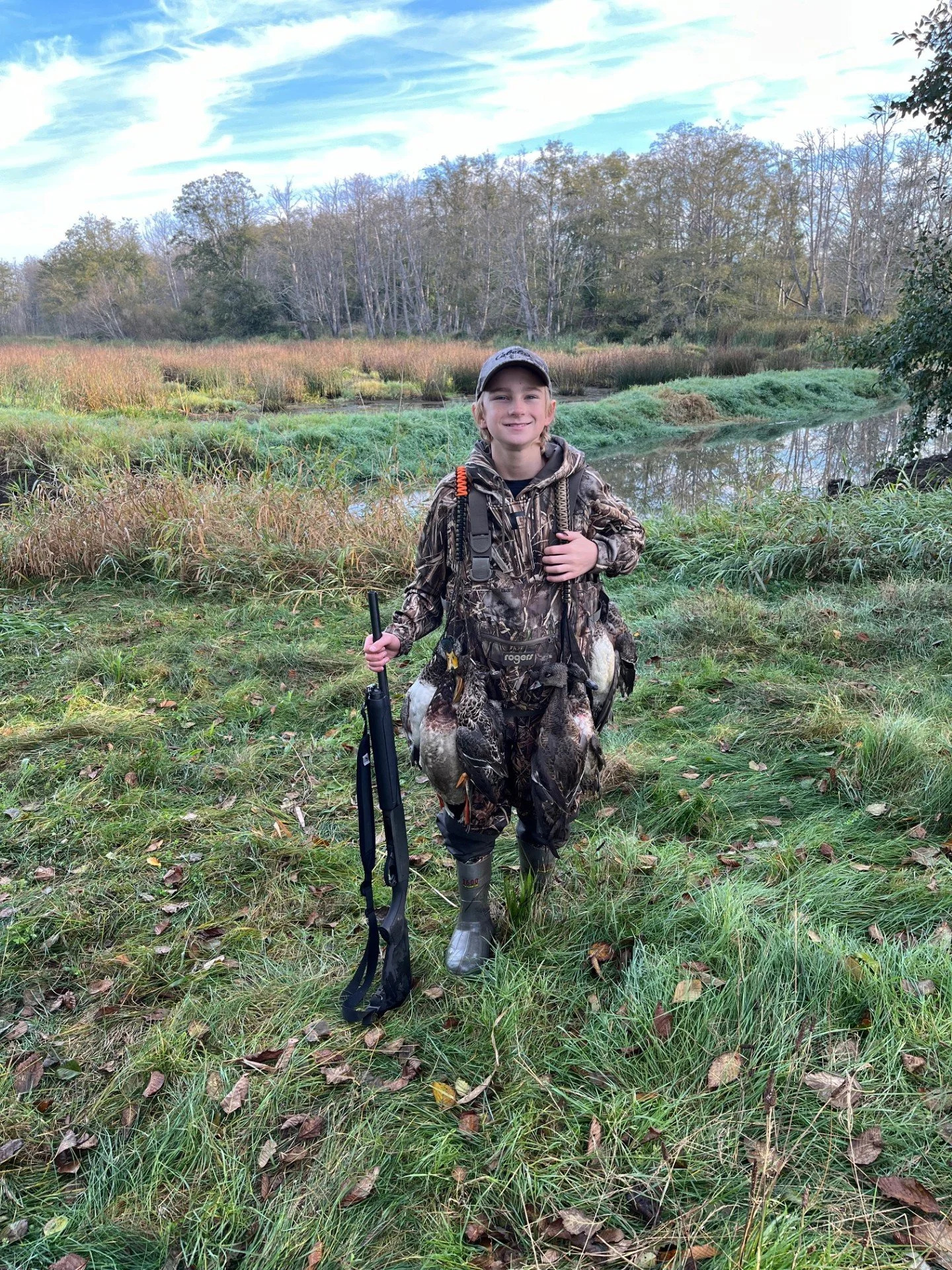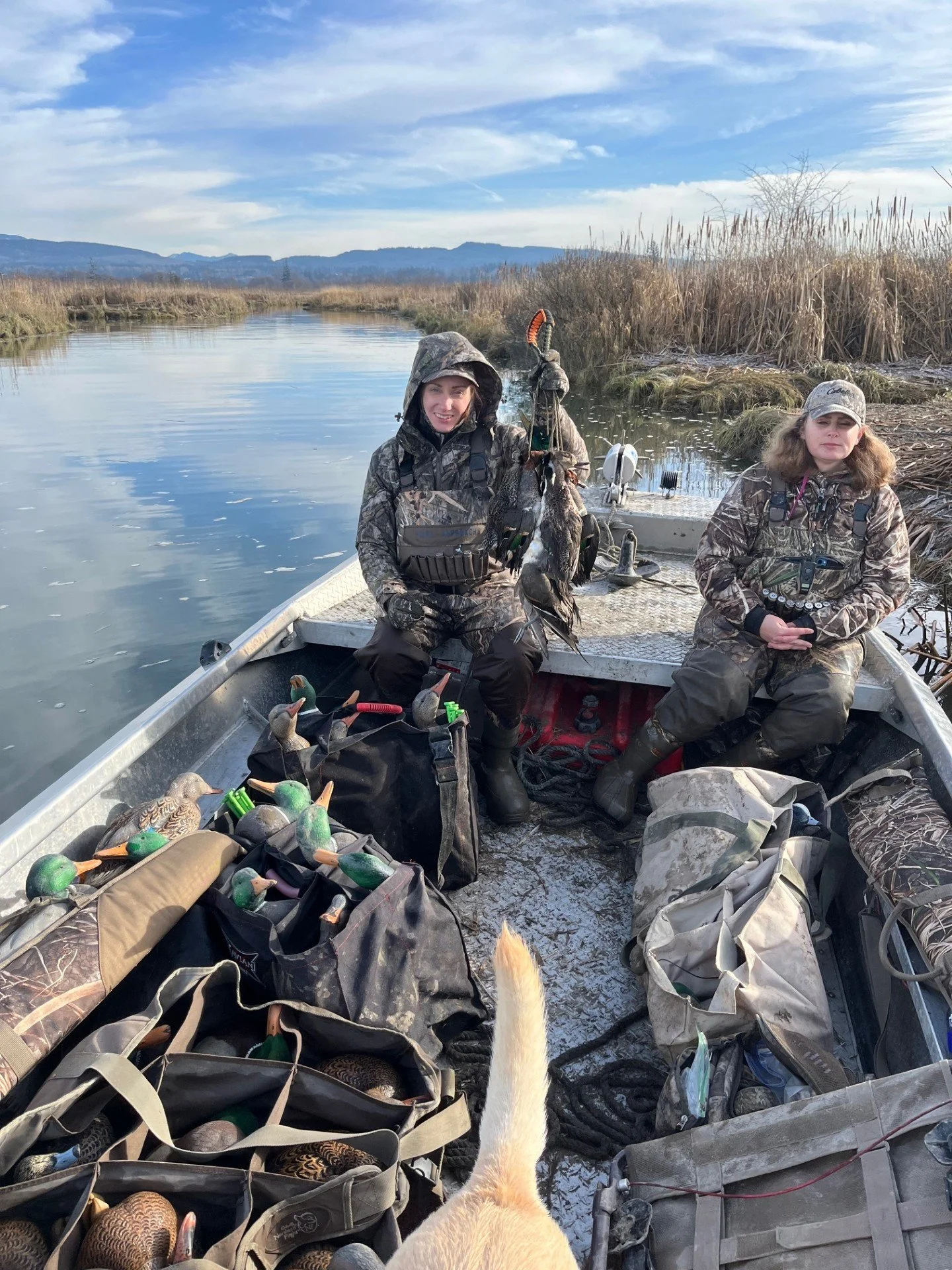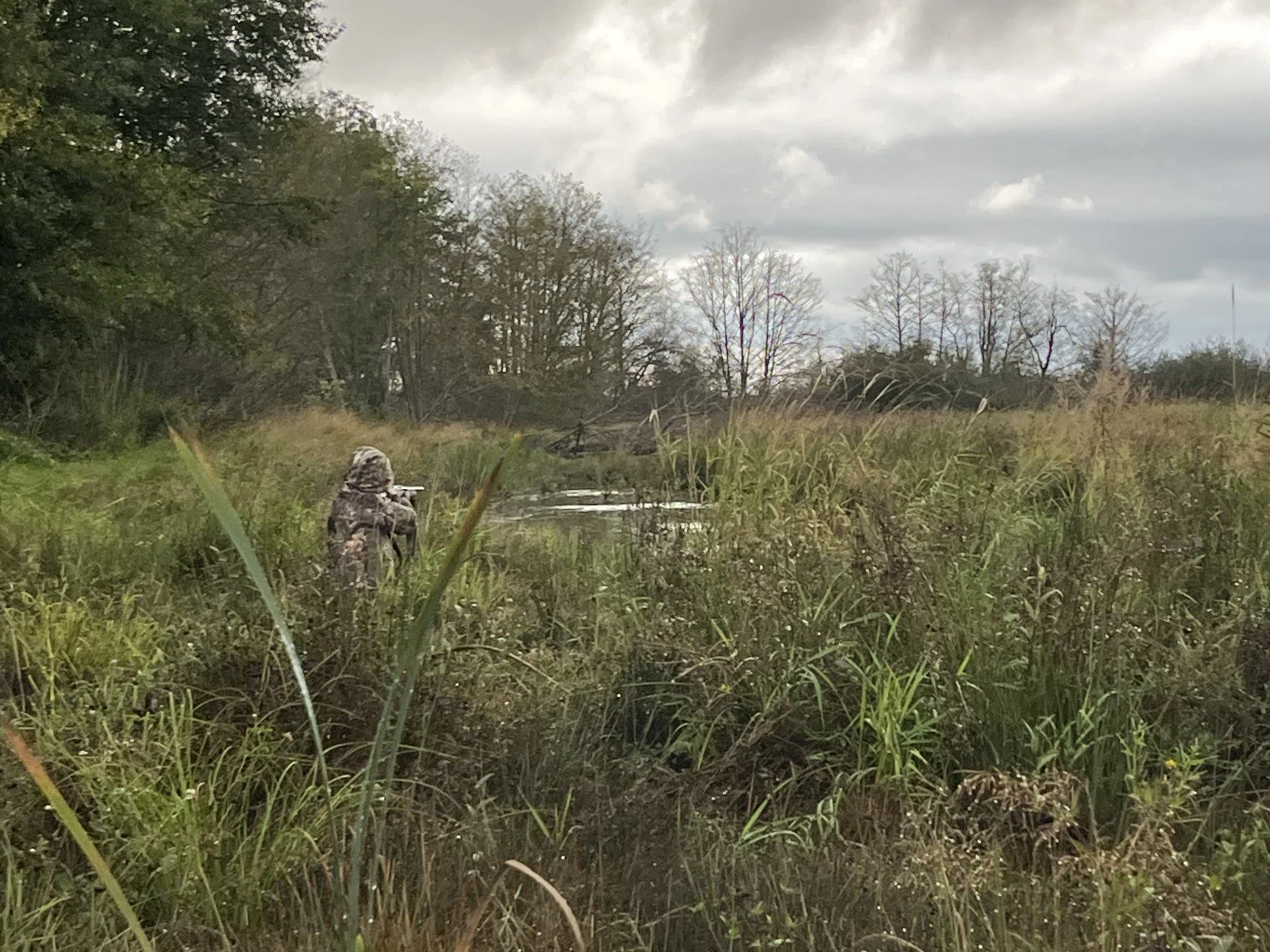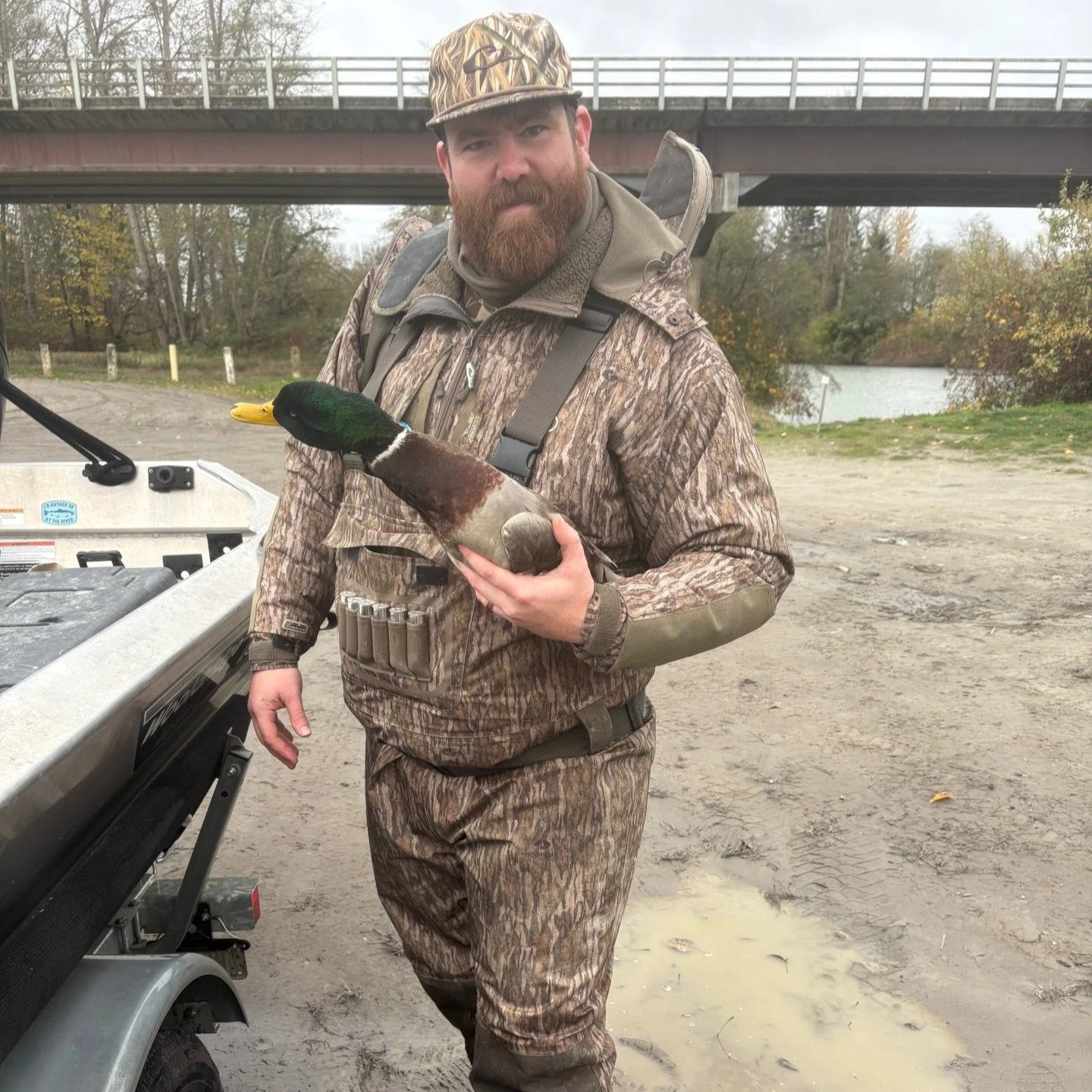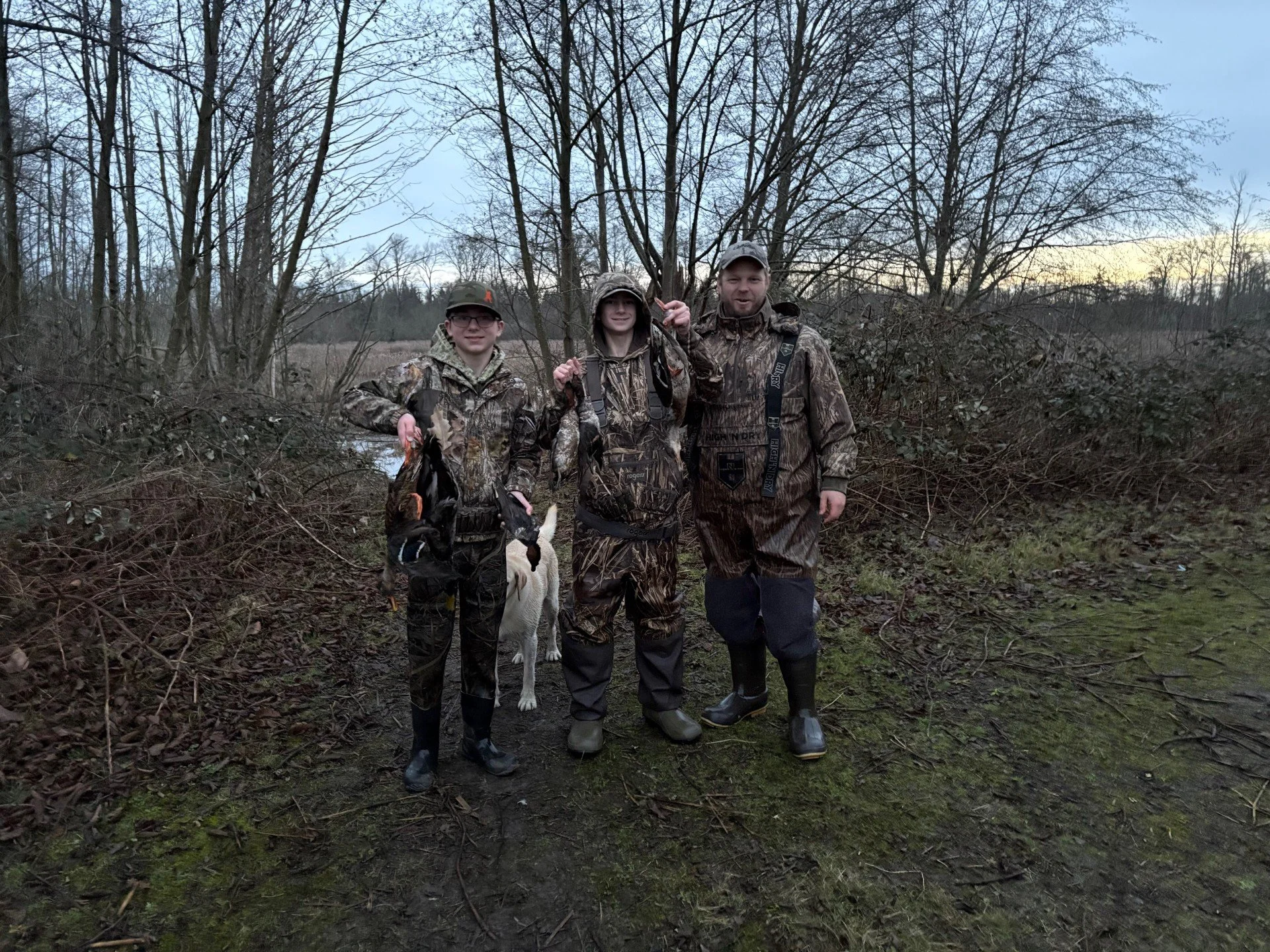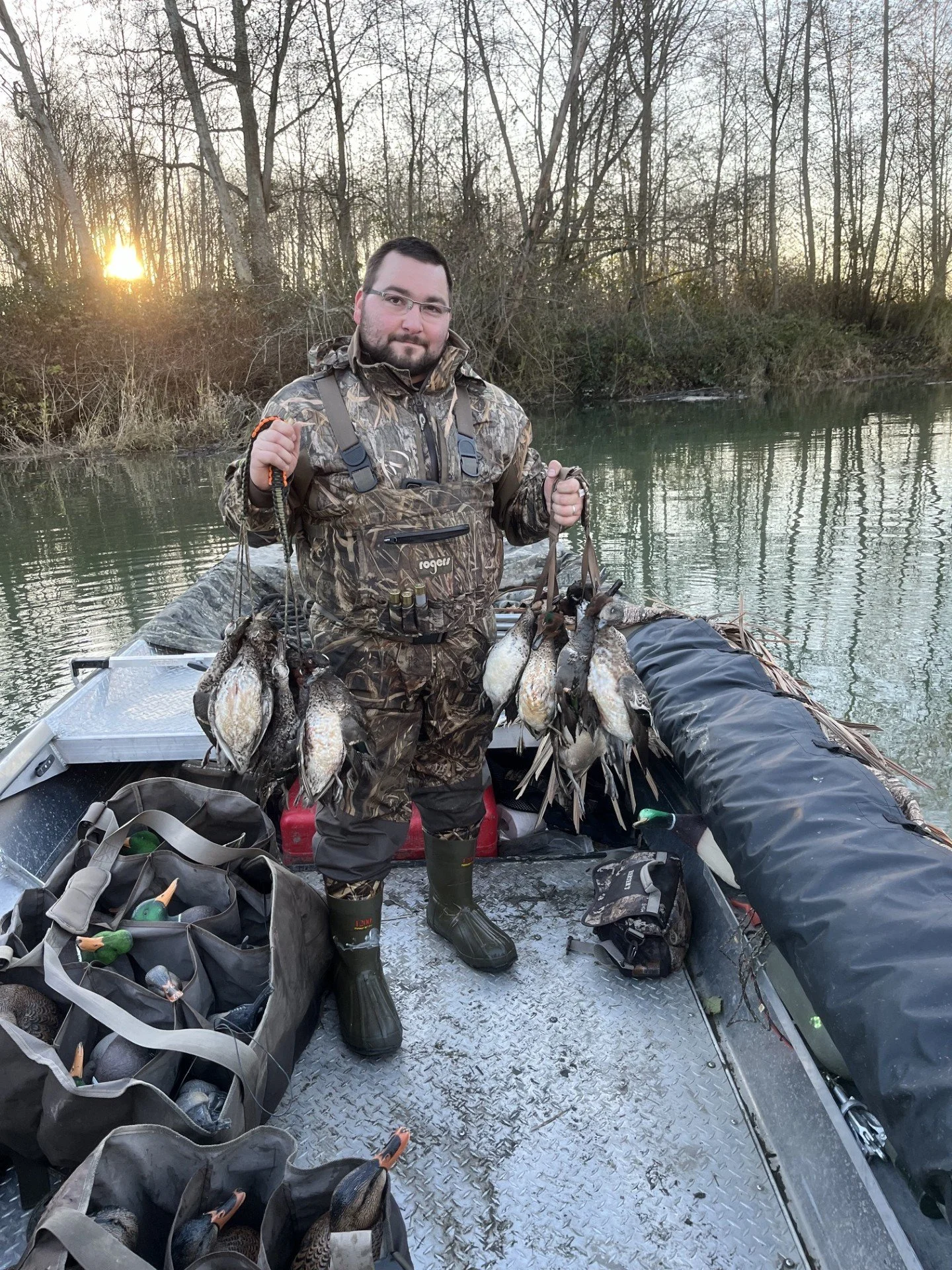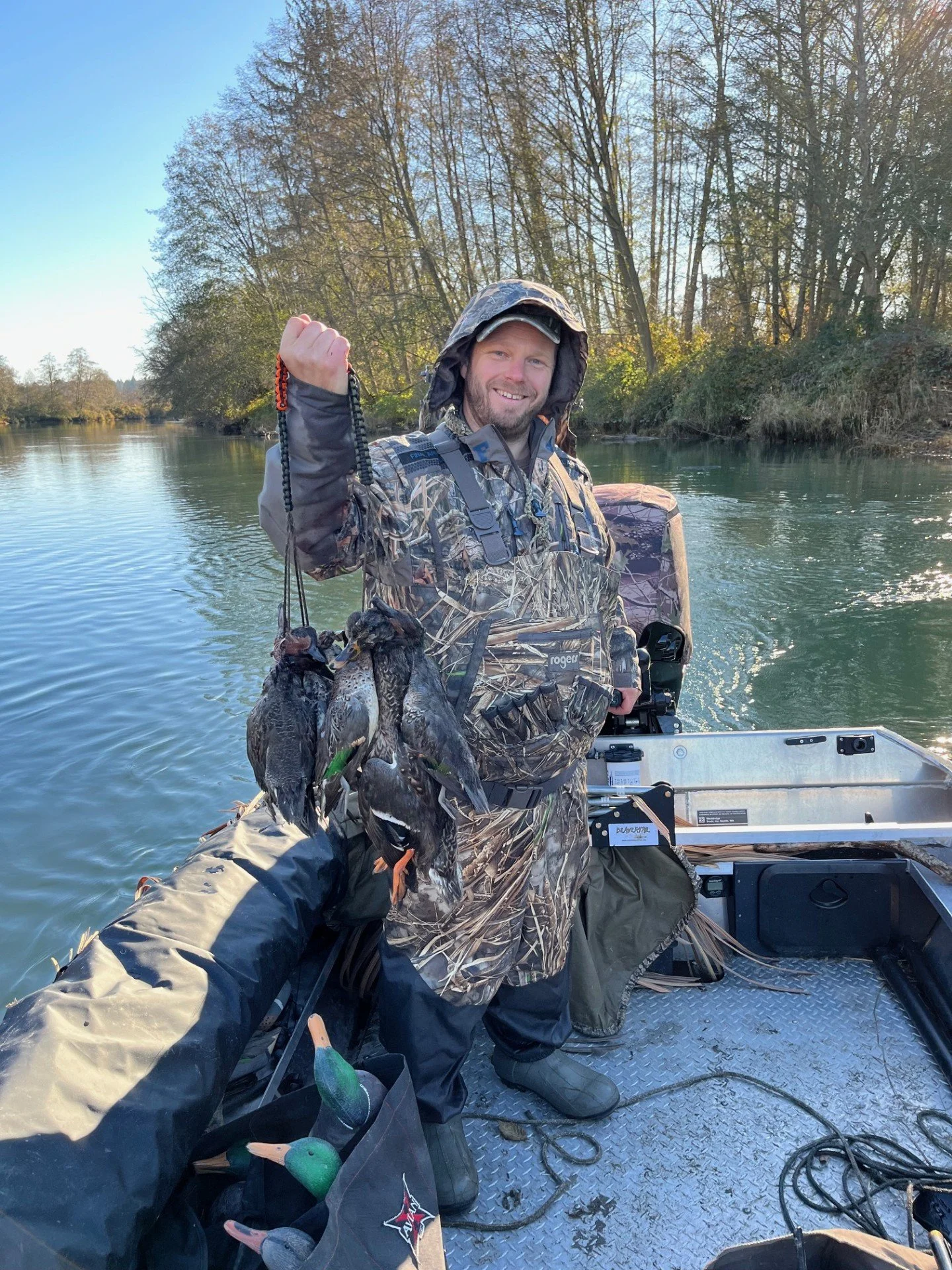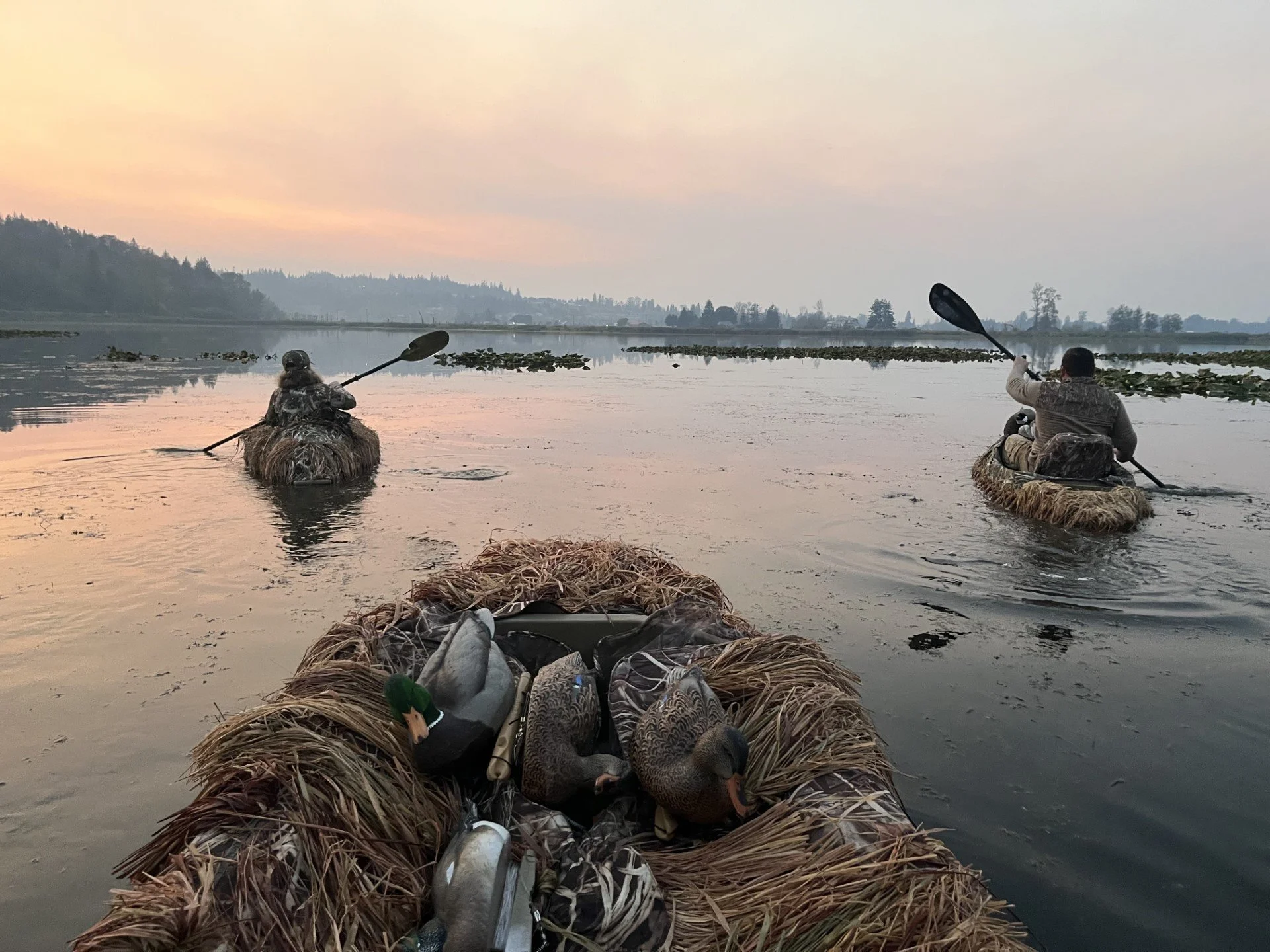
The Skagit Delta offers a chance to hunt world‑class waterfowl habitat entirely on public land. Out here, you’re in the wetlands—moving with tides, watching birds work naturally, and experiencing the hunt the way it’s meant to be. It’s a unique blend of challenge and reward that you simply don’t get in a field or pit. We have the fortune to hunt a variety of different wetland habitats in the Skagit delta: Intertidal zones, cattails, and forested/grassy freshwater marshes all dominate the area. Each provides its own type of hunt, creating an opportunity to change up the experience on the fly. For many hunters, it becomes a bucket‑list hunt.

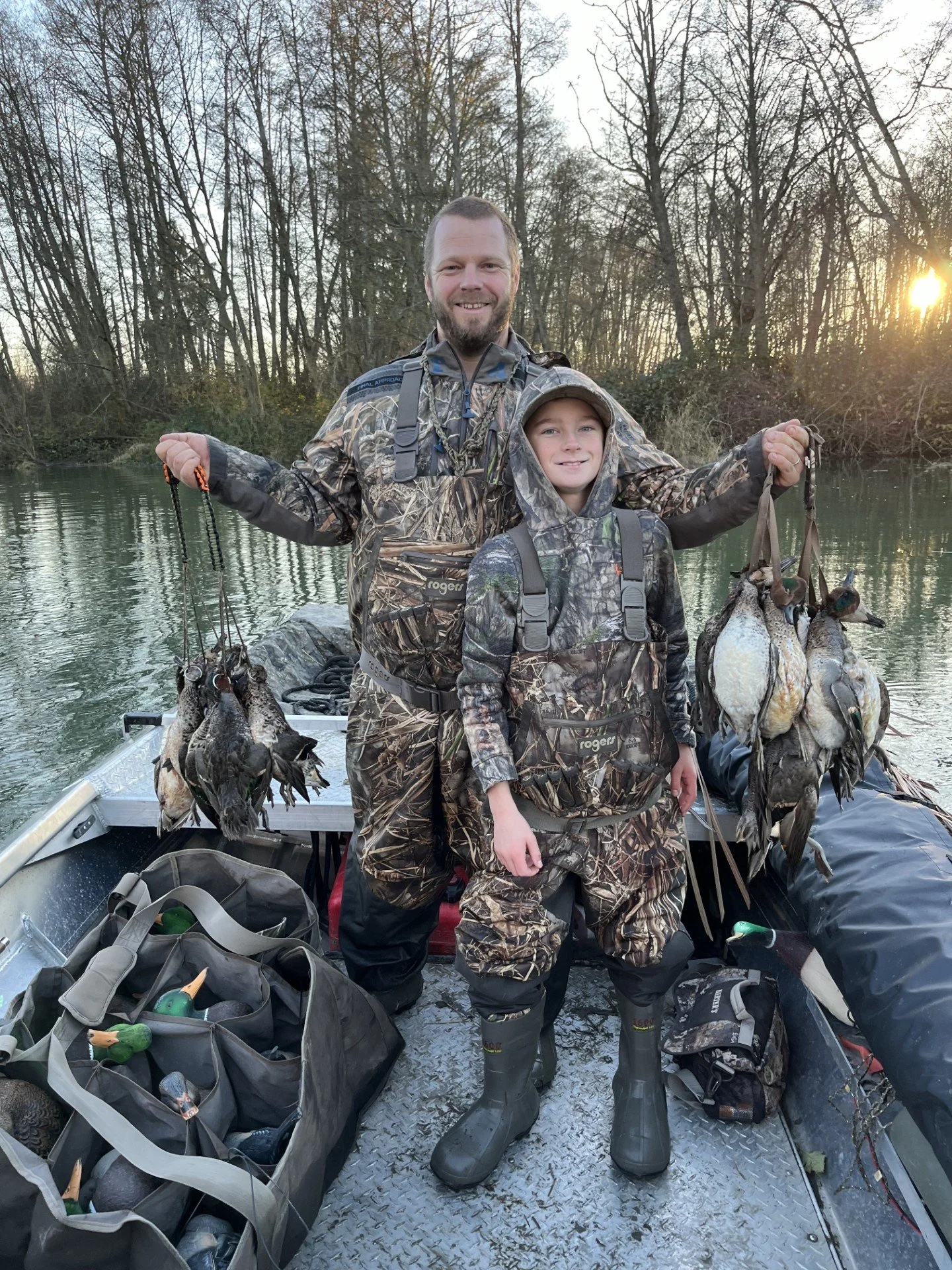
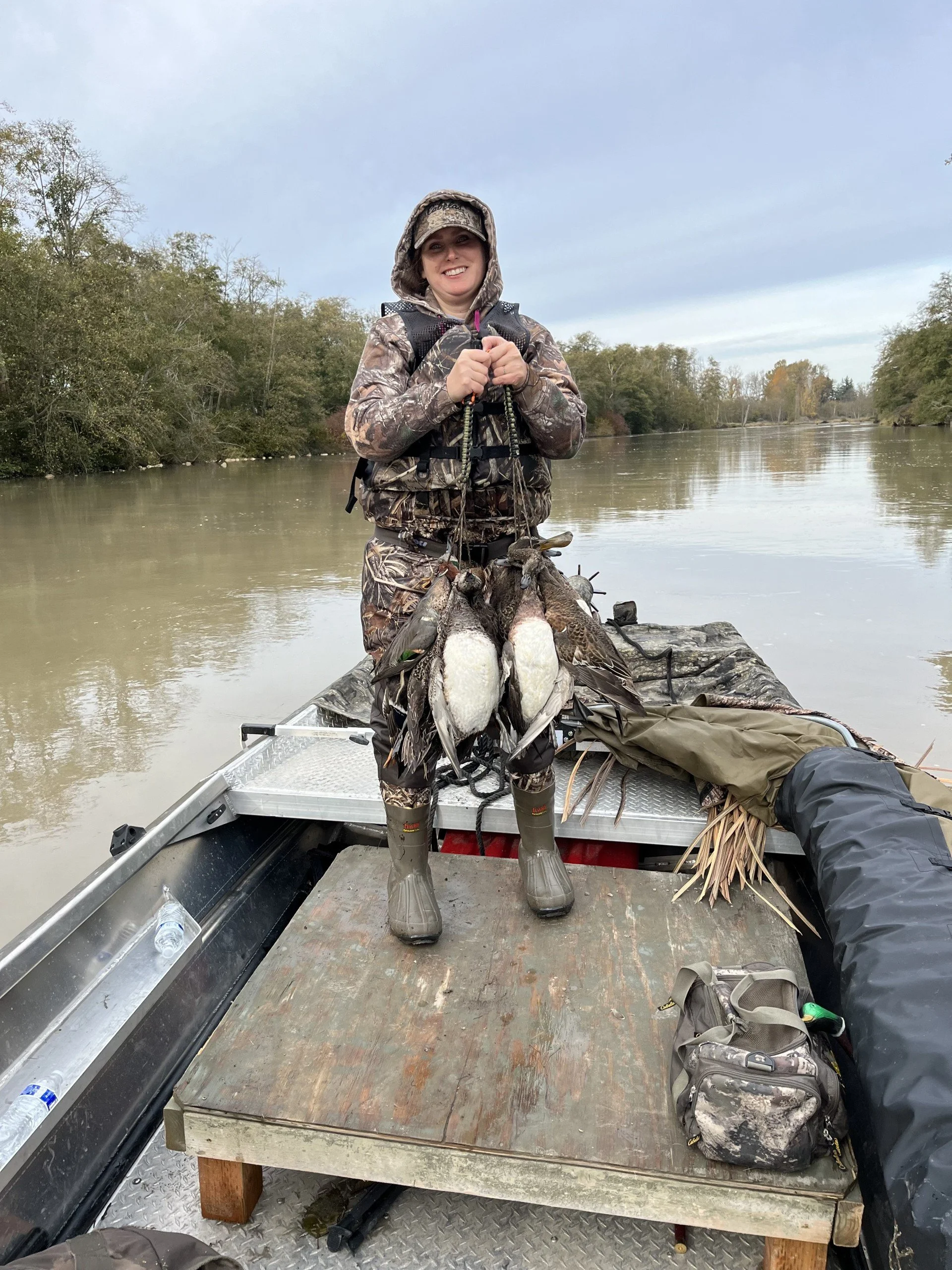
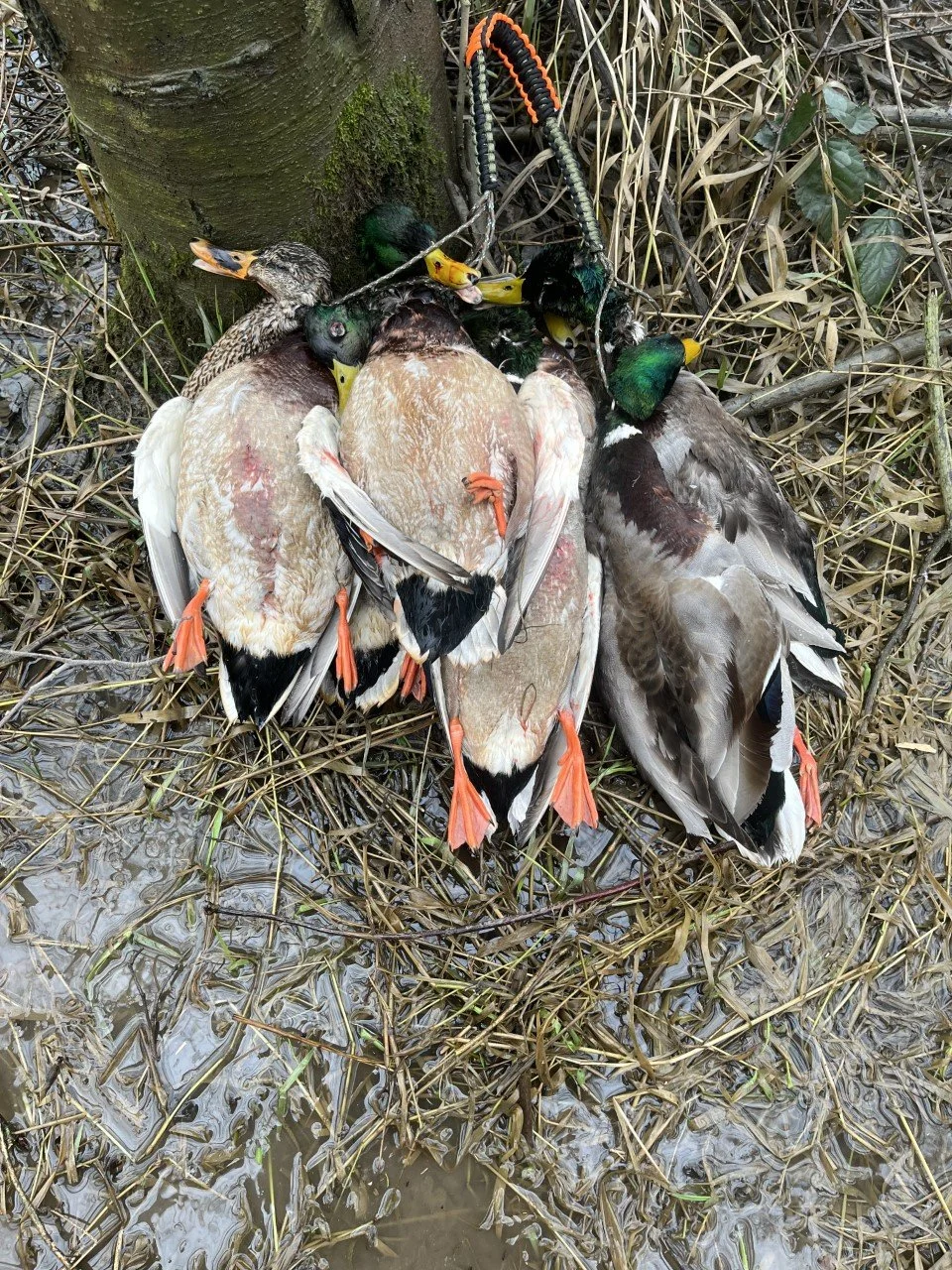
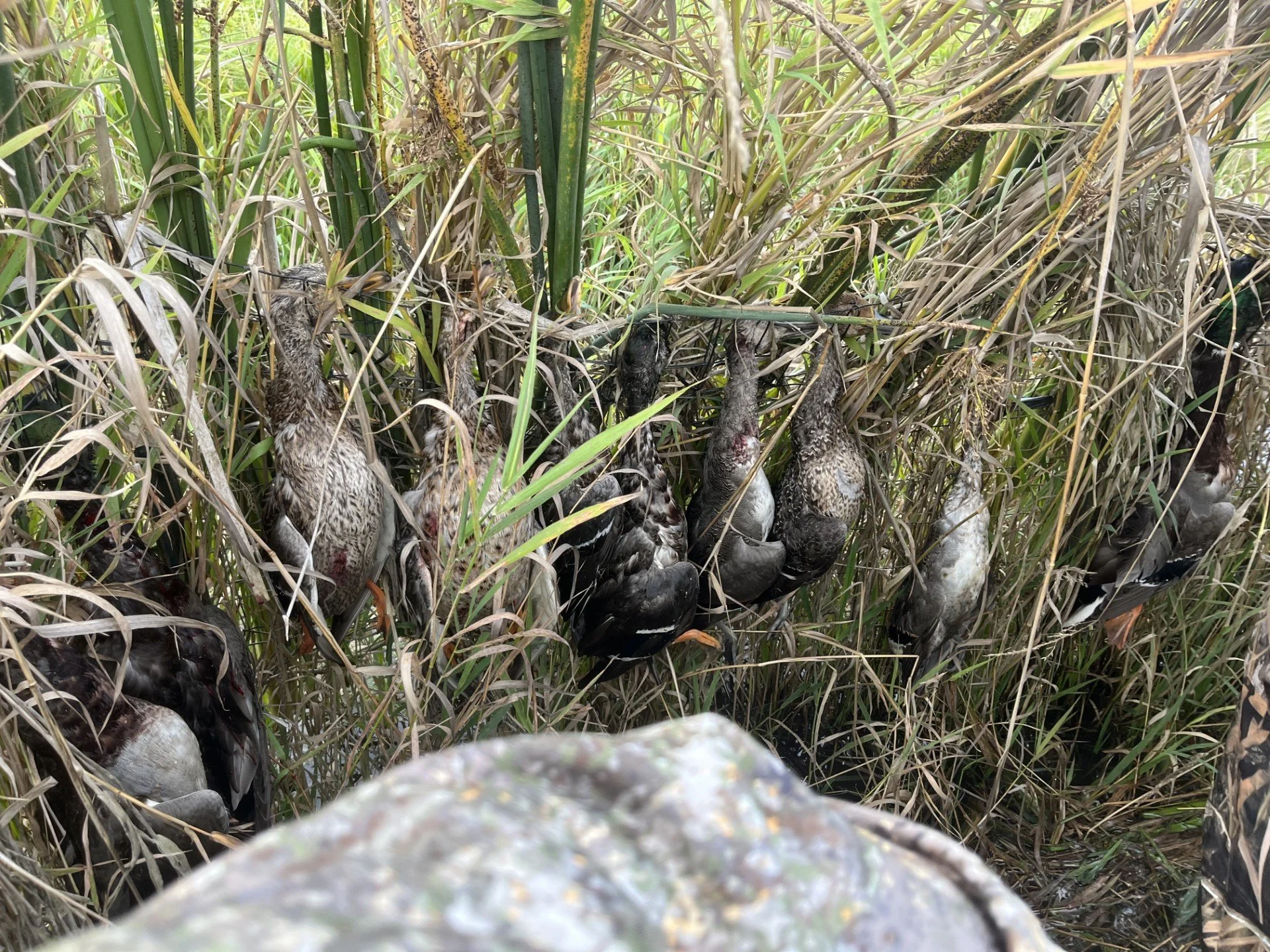
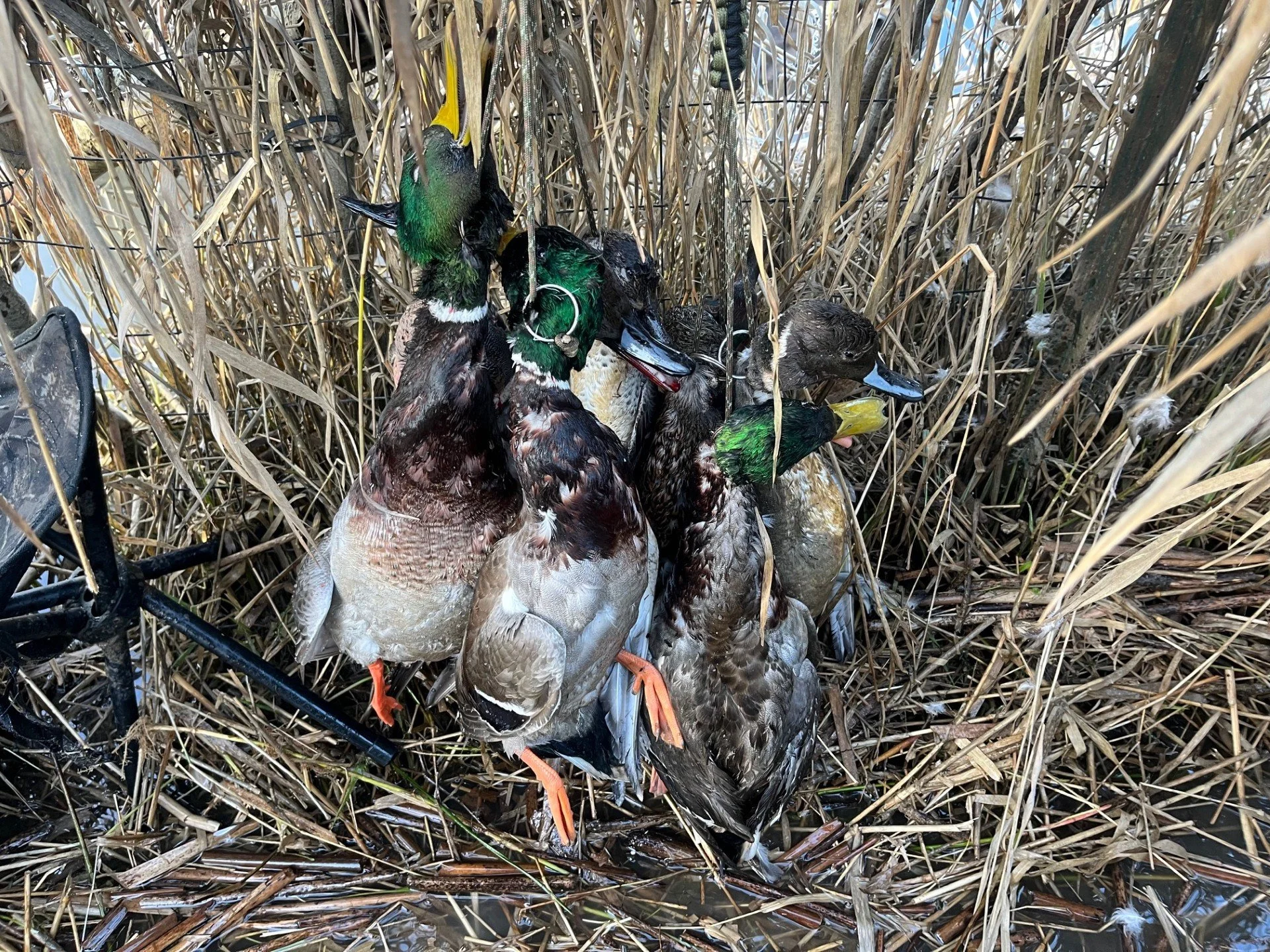
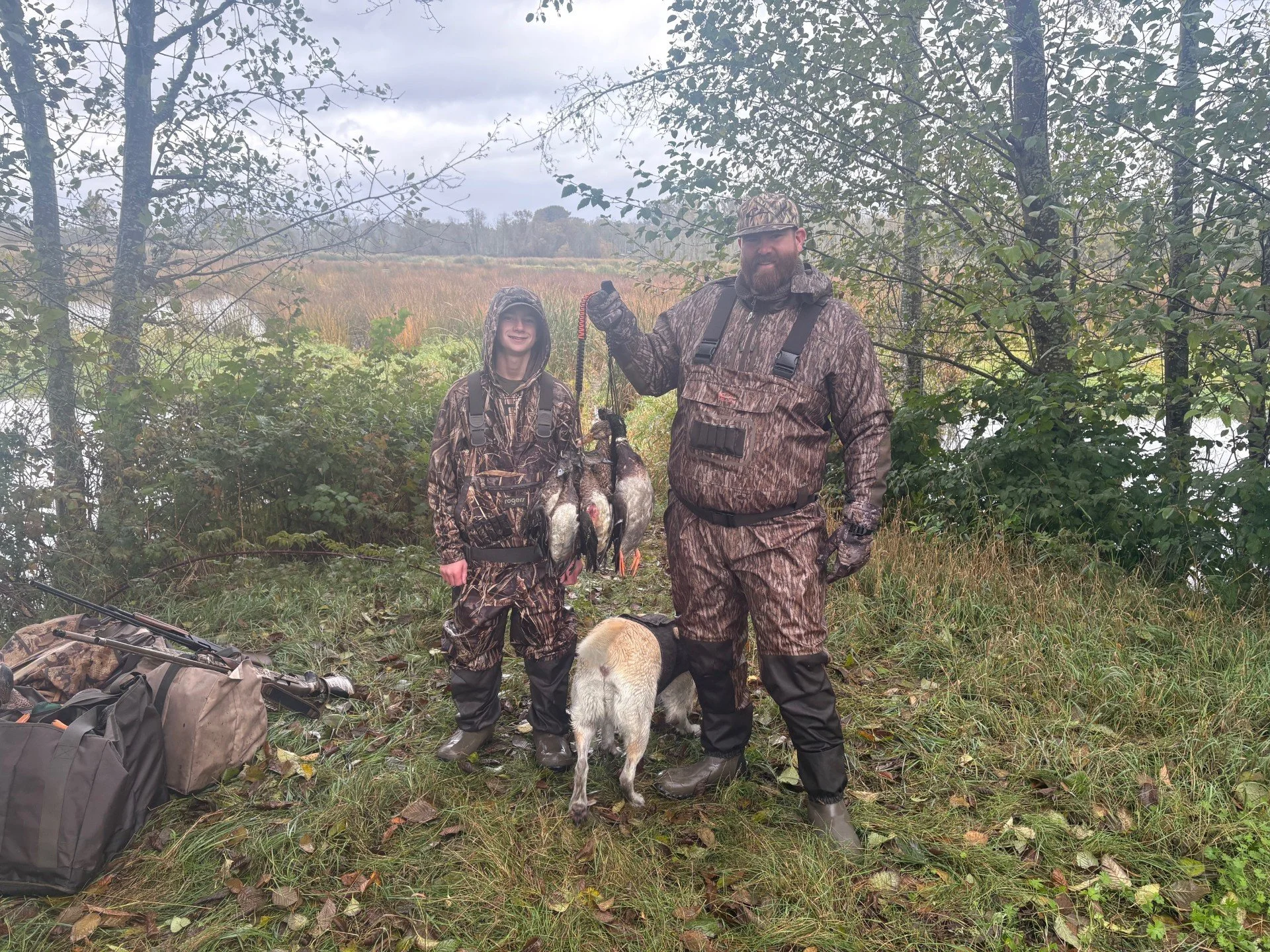
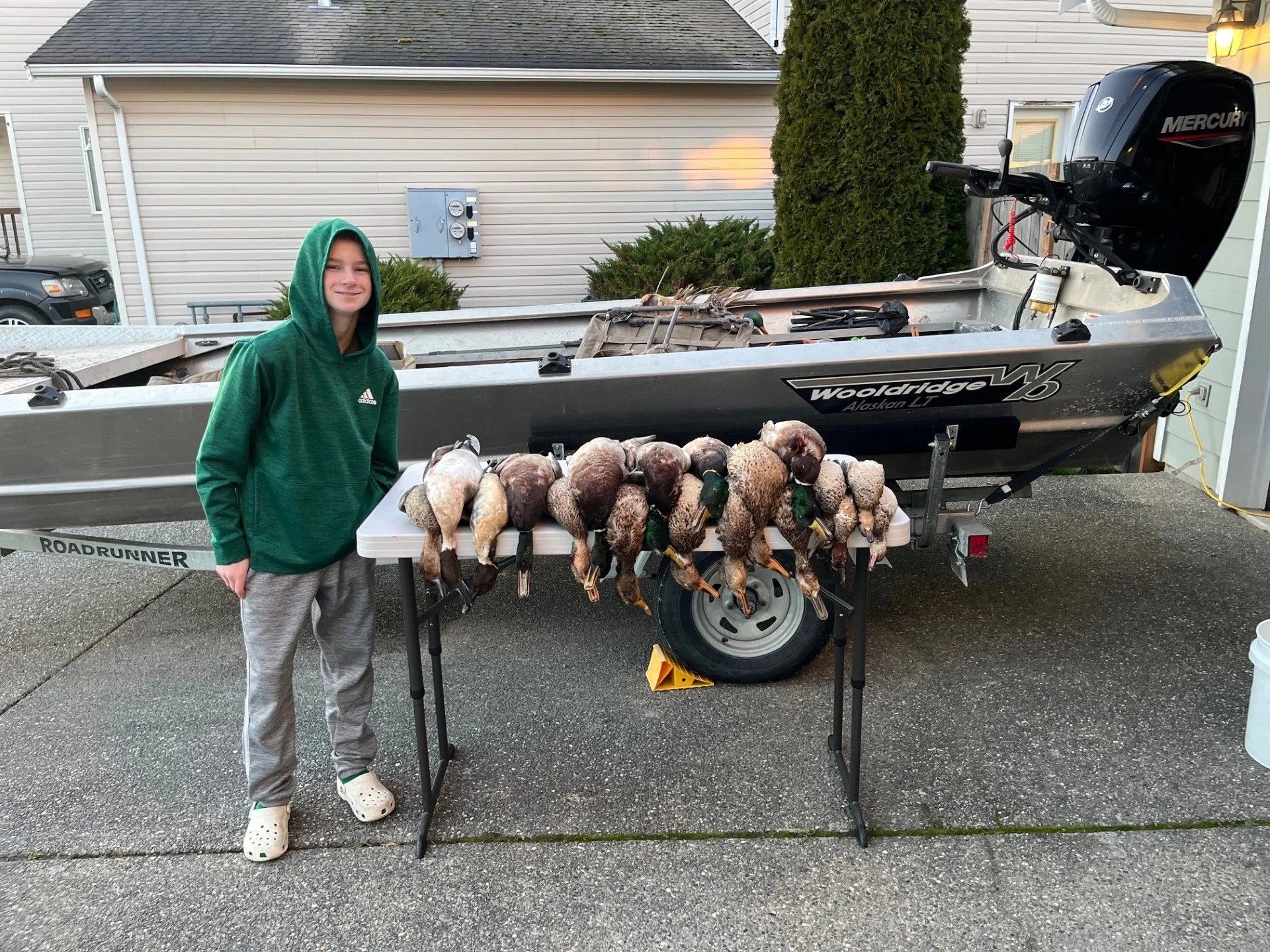
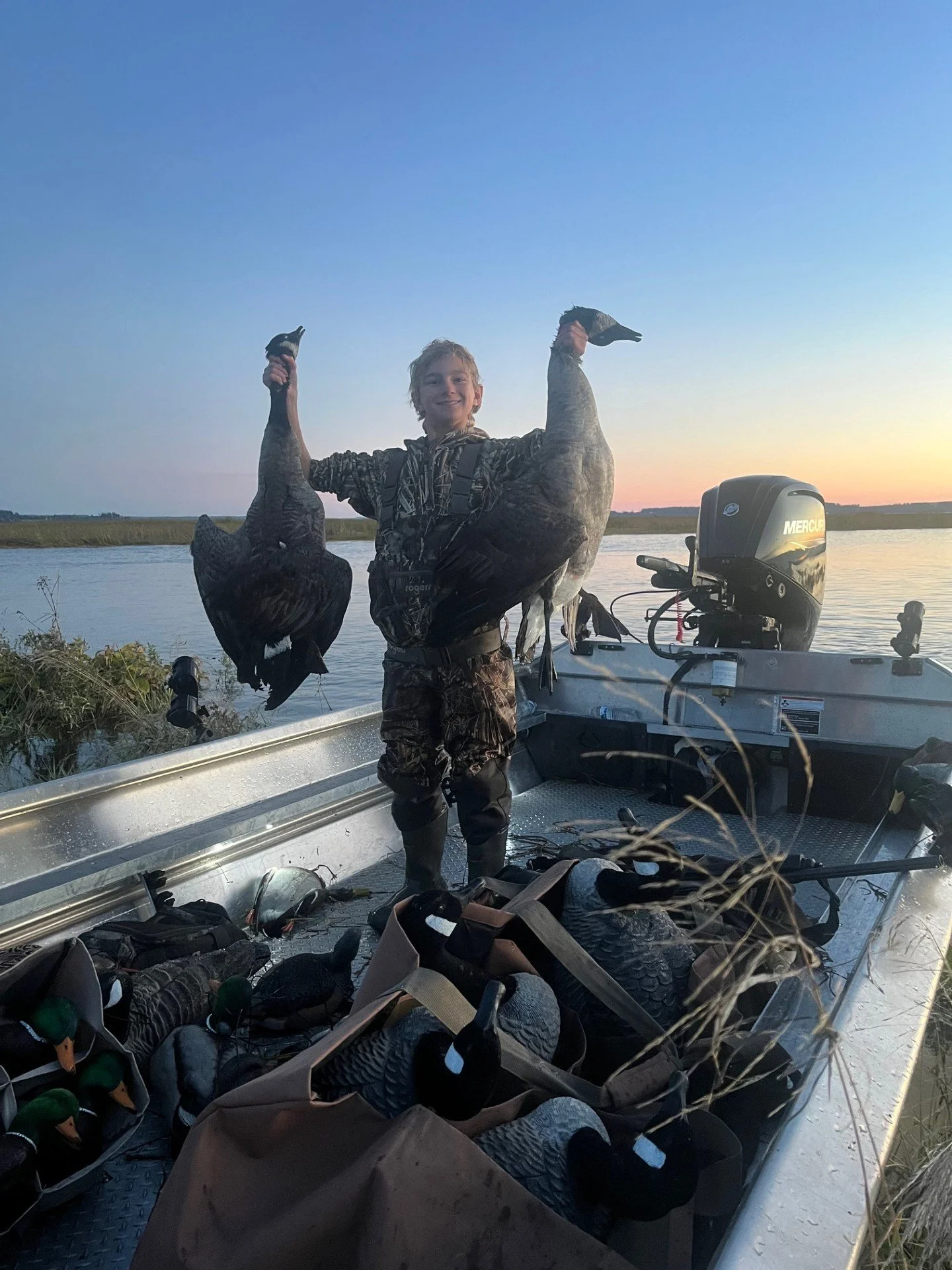
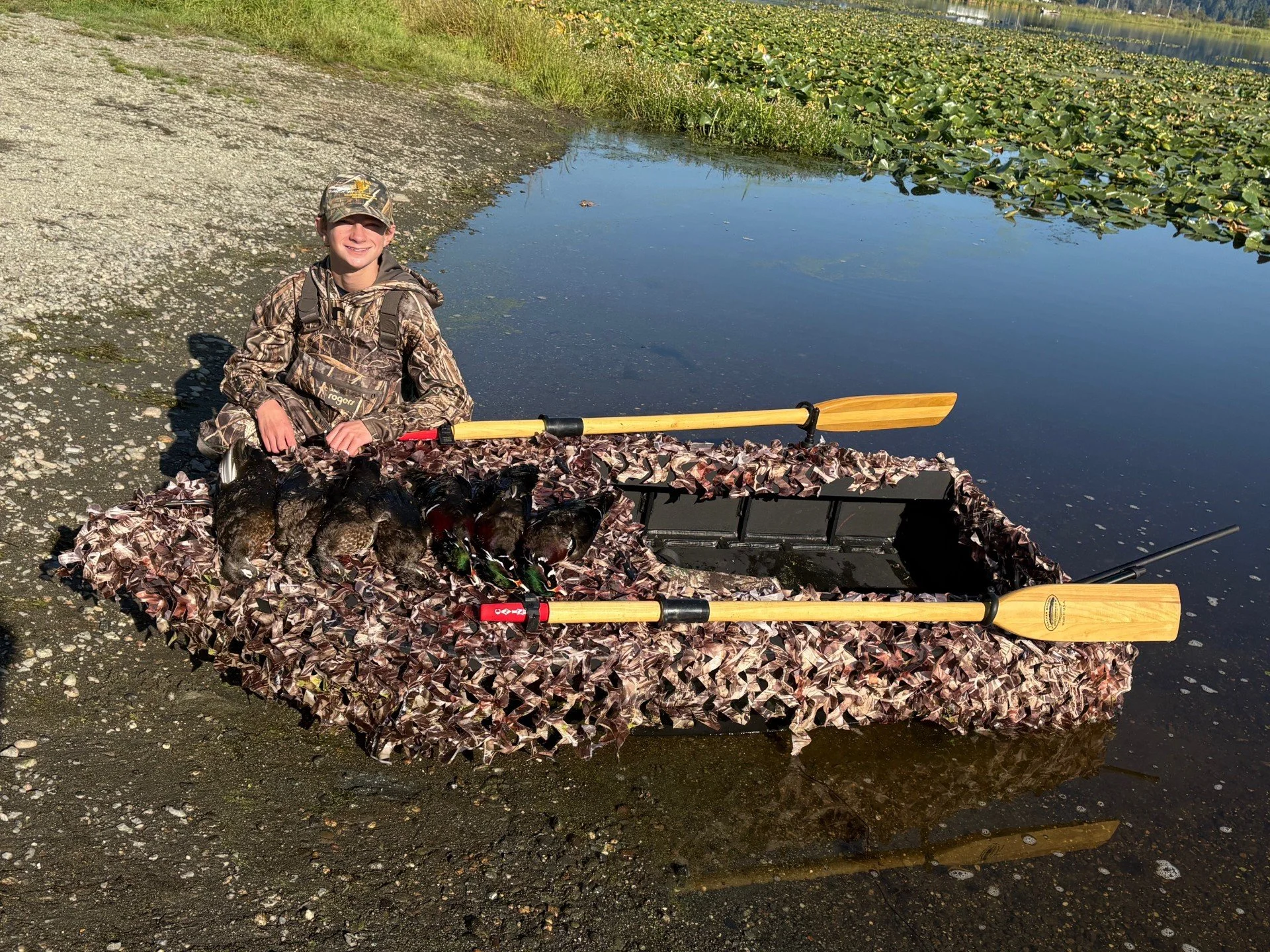
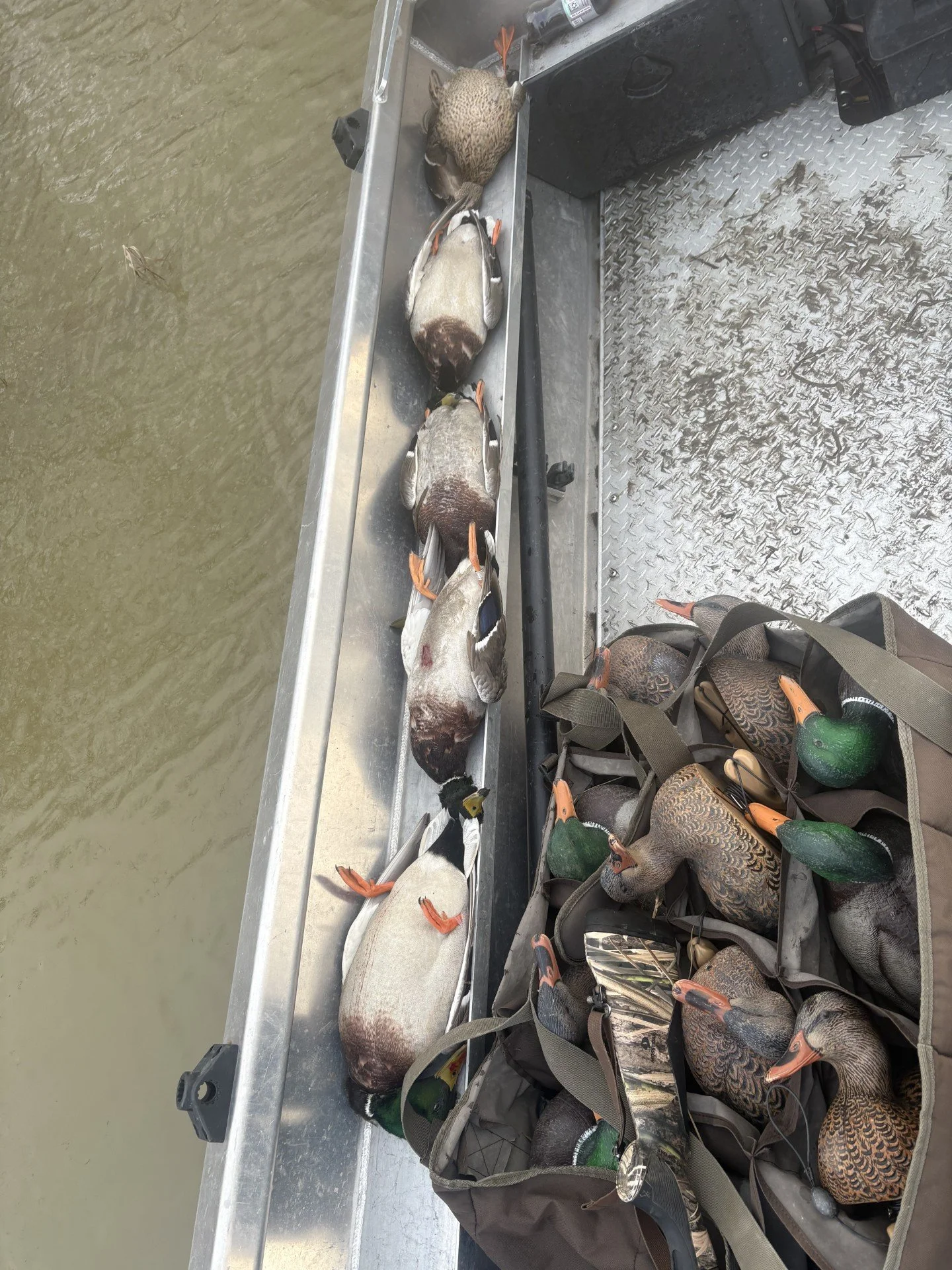
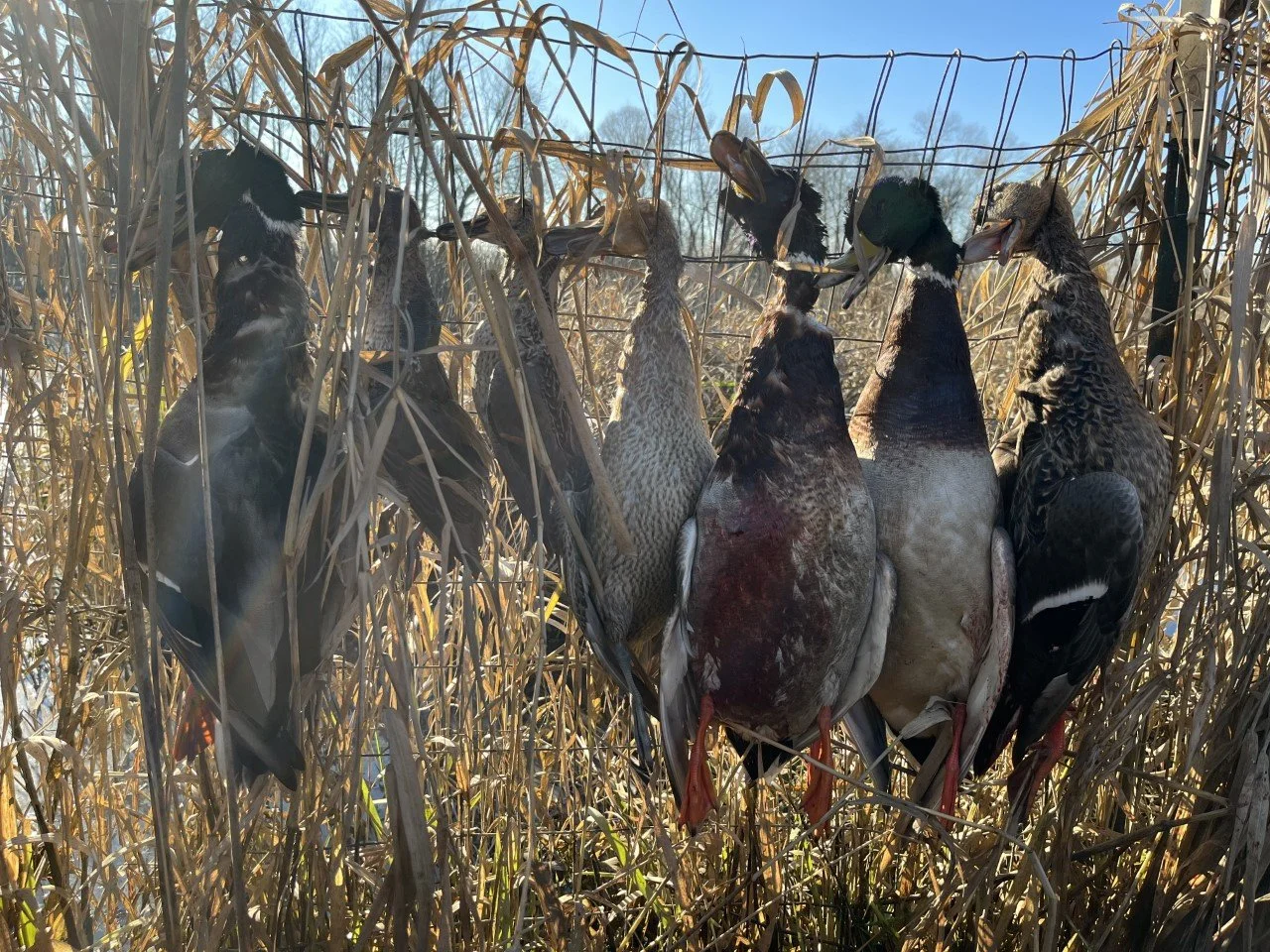
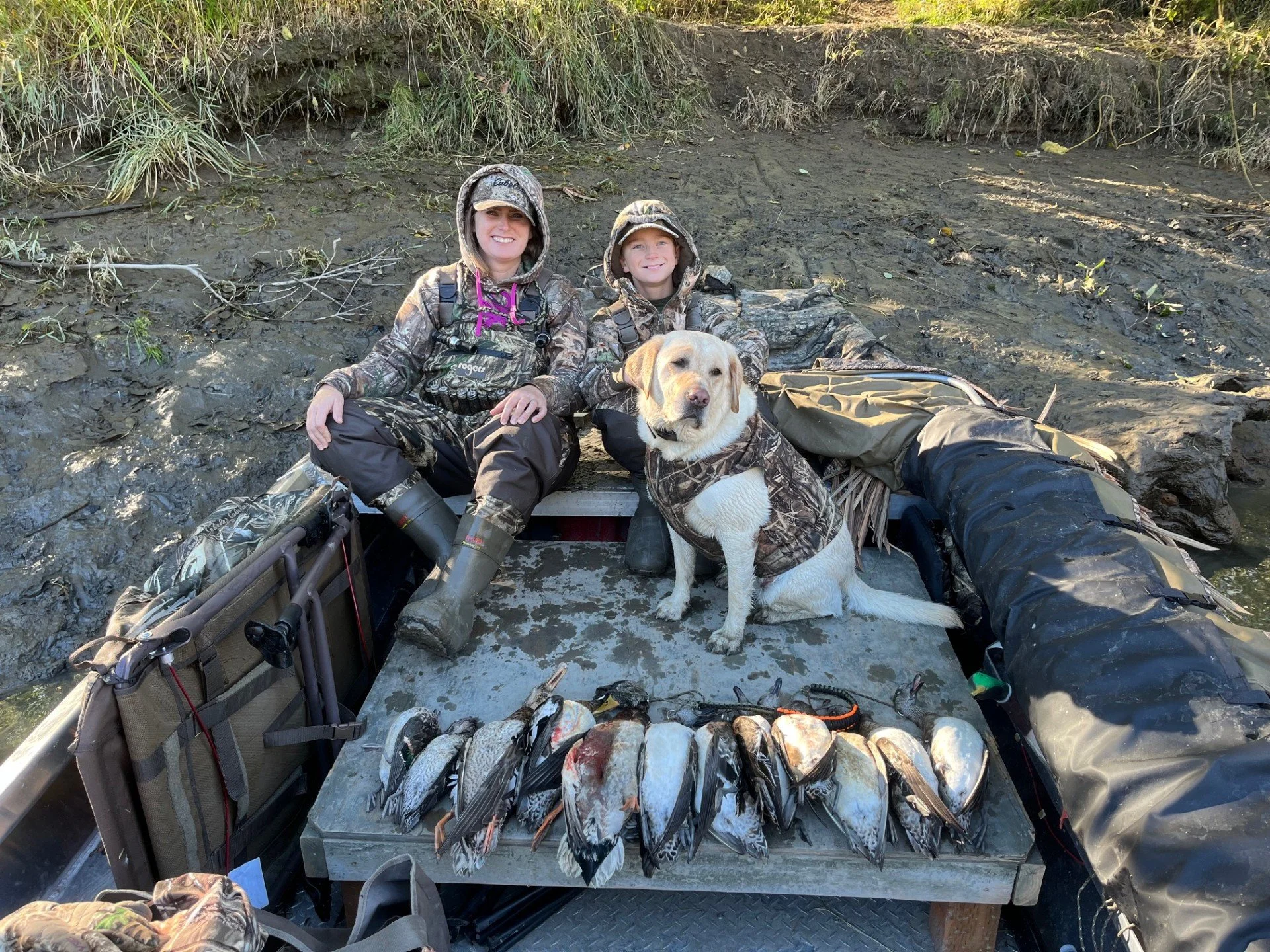
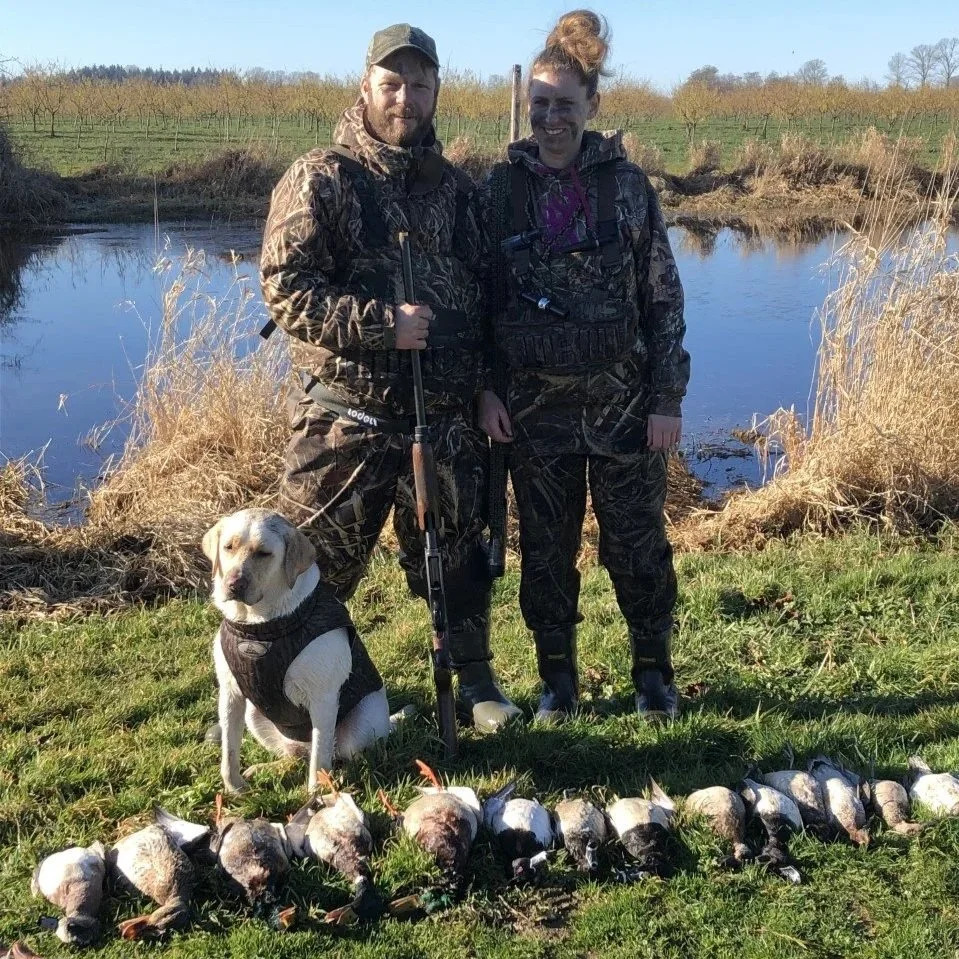
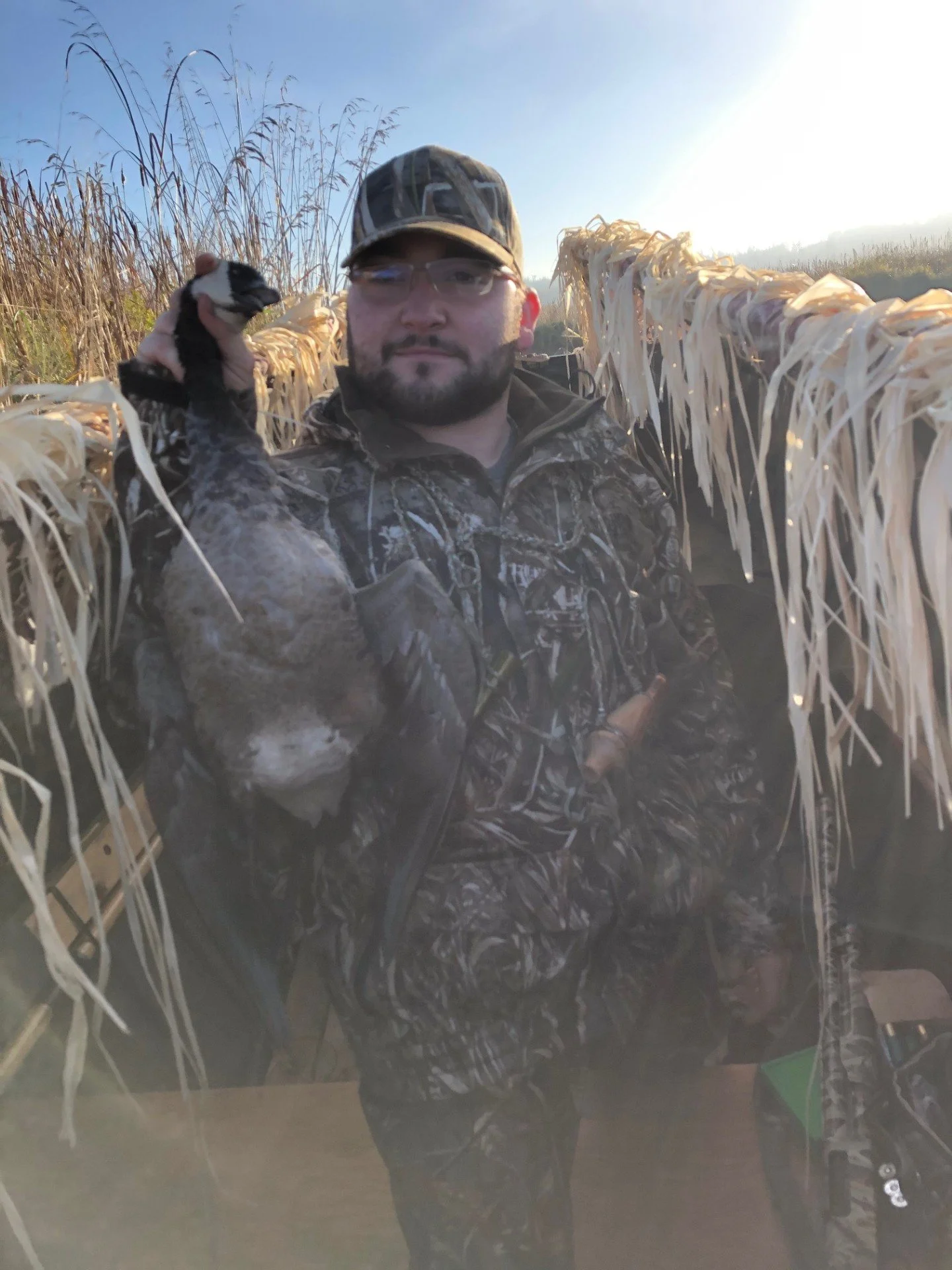
We routinely pick up a mixed bag of mallards, pintail, wigeon, and green-winged teal. We occasionally take wood ducks (early season), spoonbills, and gadwall. Cinnamon and blue-winged teal can on rare instances be taken within the first 2-3 weeks of the season. Setting up for goose specifically is impractical in the marsh, but we do get opportunity shots at Canada geese and snow geese.

Waterfowl

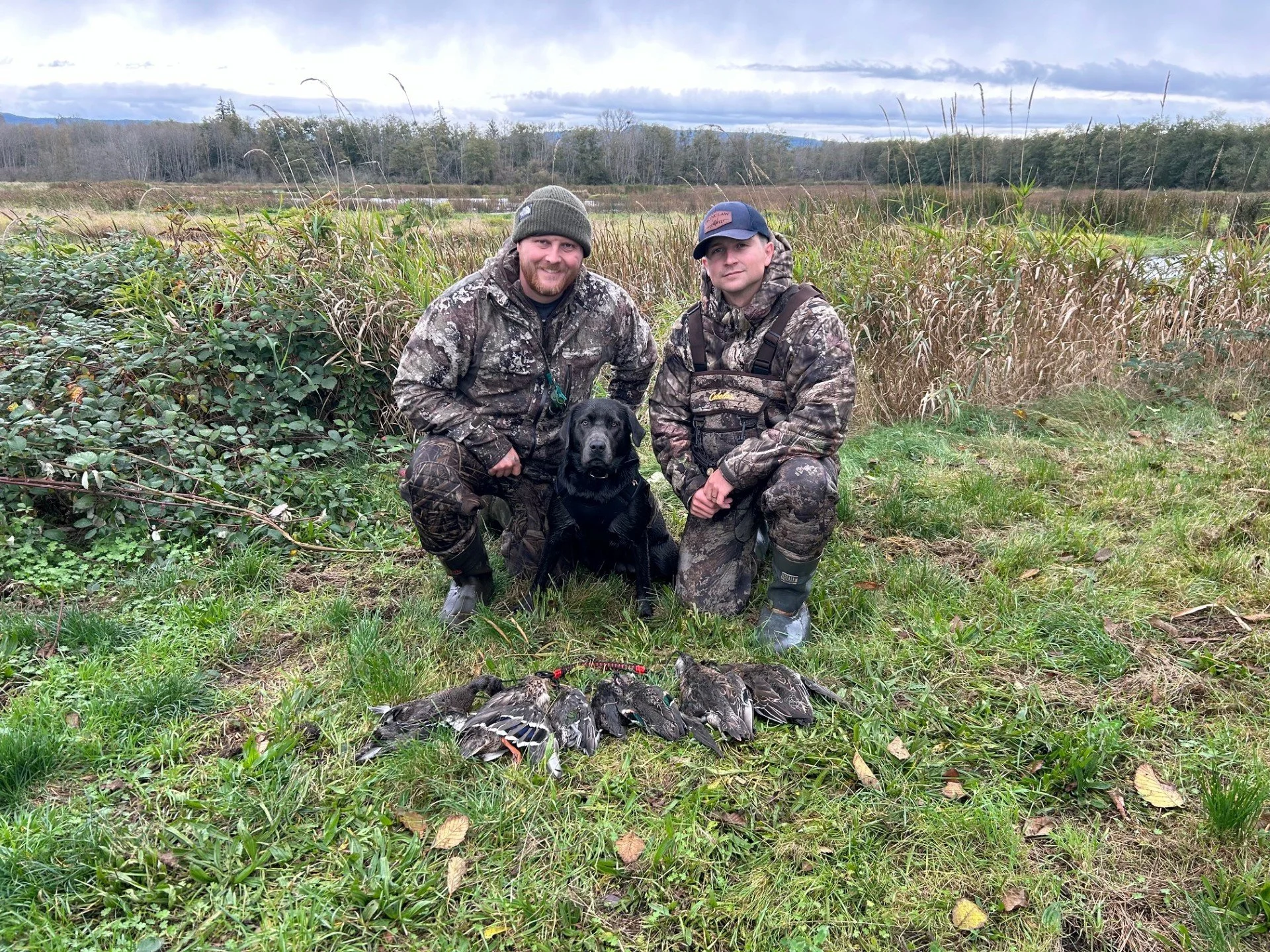
A pile of ducks from a good waterfowl hunt off the Skagit River.

What to Bring:

  • Camo or Earth Tone Waders

  • Camo or Earth Tone Waterproof Jacket

  • Camo or Earth Tone Hat

  • 12ga. or 20ga. Shotgun

  • 2-3 Boxes of Non-Toxic Shells (#2, #3, and #4 are Best)

  • Snacks, Lunch, Drinks and/or Coffee

  • Duck Call if You Prefer

  • A Dry Bag or Waterproof “Blind Bag” for Your Shells and Small Stuff

  • WA Small Game License, Migratory Bird Permit, Federal Duck Stamp

  • A Good Attitude and Great Humor

What is PRovided:

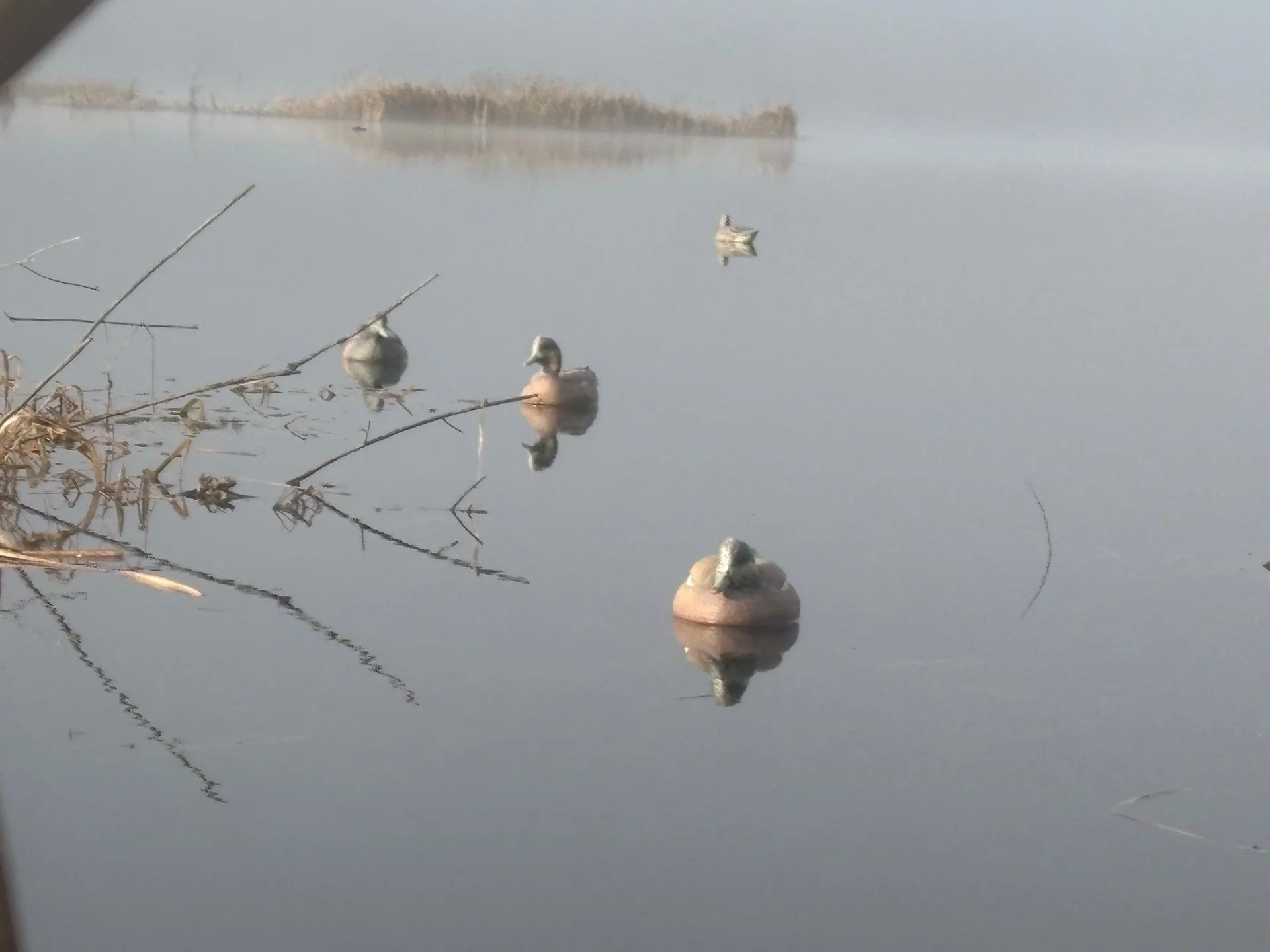
  • Decoys

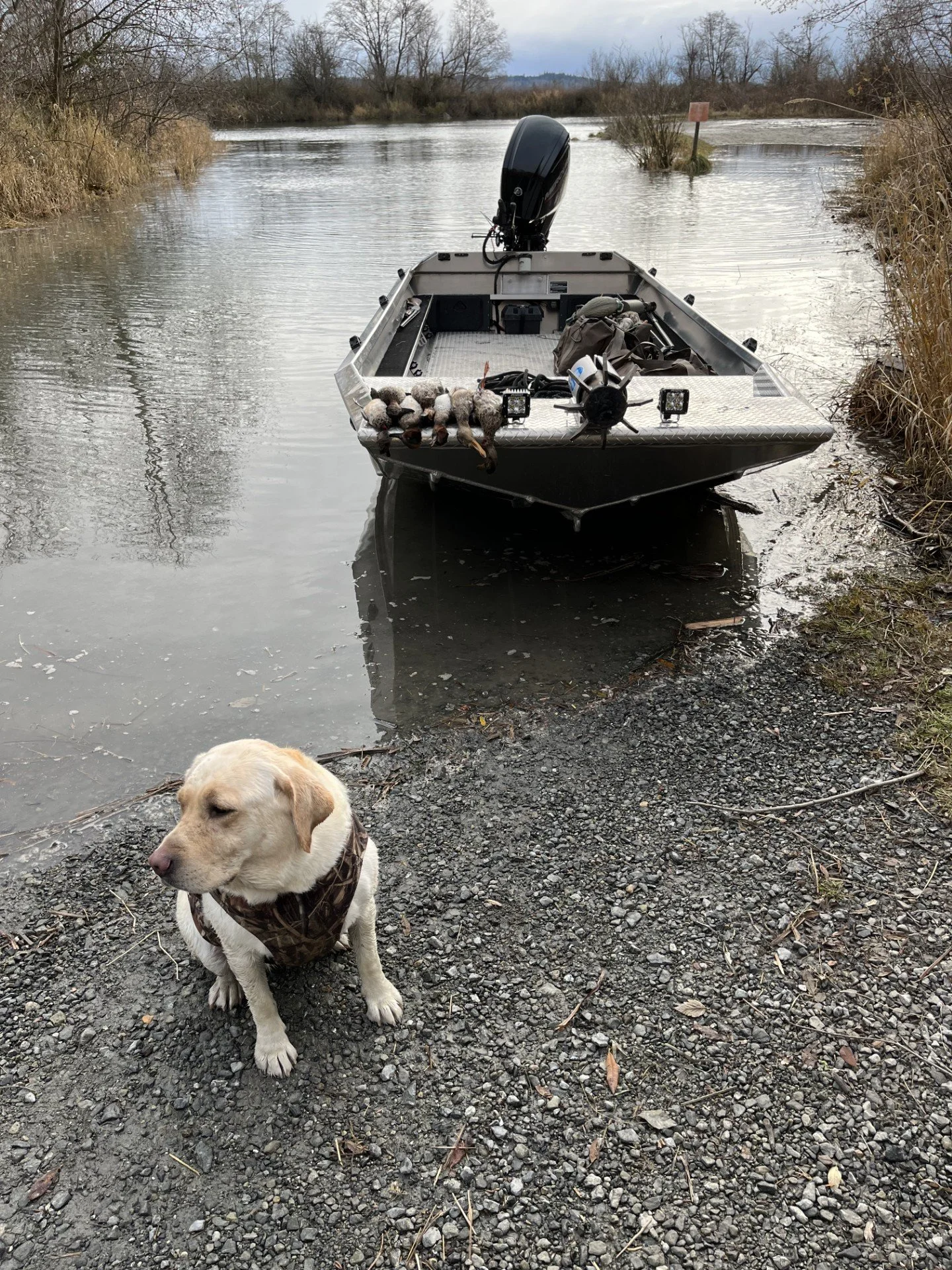
  • A Friendly, Doofus Dog for Retrieving Birds

  • Headlamps (You May Still Bring Your Own)

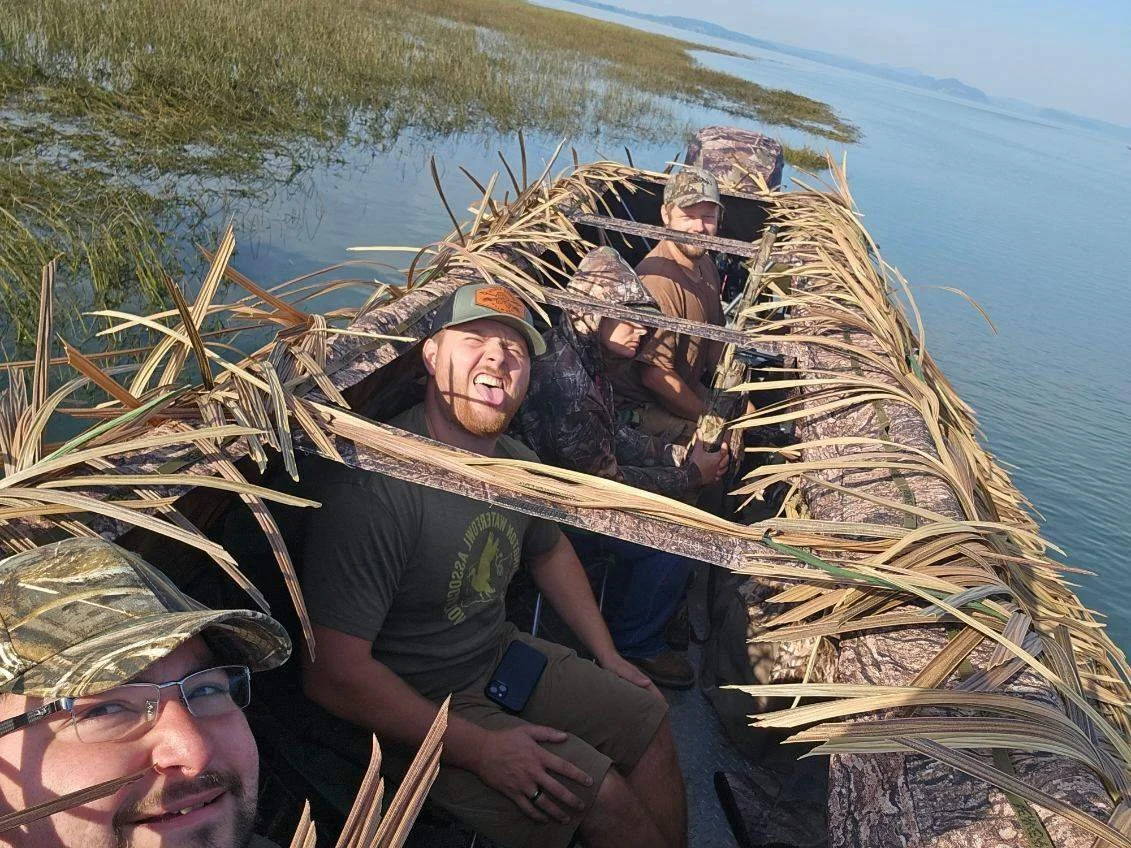
  • Quick-Set Blind

  • Donuts

  • I will contact you the day before and indicate what launch we will meet at and what time we will be meeting. Start times vary with time of year and may also be influenced by tides. Usually, an hour and a half to two hours before legal shooting light is plenty sufficient.

    We’ll launch and go pick one of a variety of locations depending on river and tidal conditions, or what I expect from the birds. We’ll set decoys and the dog blind, then get tucked up and relax until legal shoot.

    I rarely hunt out of the boat. It is usually better to get out into the marsh and set up a decoy spread in some calm water. There are some stick-built blinds around Skagit Bay. We may use them or simply tuck up in cattails/brush. If cover is sparse, we’ll utilize a quick-set blind.

    Expect weather conditions to change during the day or to be different from forecasts. Expect bird count and total take to vary—they are wild animals in their natural habitat and we are on their schedule as much as ours.

    Expect that we may reposition depending on the tides and bird action.

  • 3” steel shot in #2, #3, and #4 works just fine early season. Late season, I don’t recommend #4 shot as the birds are fully plumed and it isn’t as effective. You are welcome to bring bismuth or tungsten if you choose.

    My 2-cents is don’t bother with 3-1/2” shells. They are unnecessary and just beat up both your shoulder and your pocketbook.

    Run a choke you are comfortable with. If anything, go with modified. I often run an impoved as many of our shots are within 20 yards.

    Non‑toxic shot is required for all waterfowl hunts, and lead shot is not permitted on my boat or in the field. Ammunition will be inspected prior to launch for suitability and adherence to non-toxic legal requirements.

    For a $50 fee (per person) I can provide ammunition to use during the hunt. Any unspent ammunition must be returned at the end of the hunt.

  • Unfortunately, no. You must have your own firearm.

  • Usually until 1 or 2 pm. If the evening hunt, bird patterns, and tides look promising, or if we get a late start, times may be extended.

  • YES. You’ll need full chest waders for this hunt as we’ll hunt in wetlands where water depth and footing change throughout the day. The hunt requires the ability to stand, move, and wade in water. Staying mobile is a big part of staying safe and staying on the birds. We often reposition based on tide height and how birds are working. Being comfortable walking or standing in water and soft ground is essential.

  • I currently do not allow other dogs for safety and logistics reasons. I may make reconsiderations in the future.

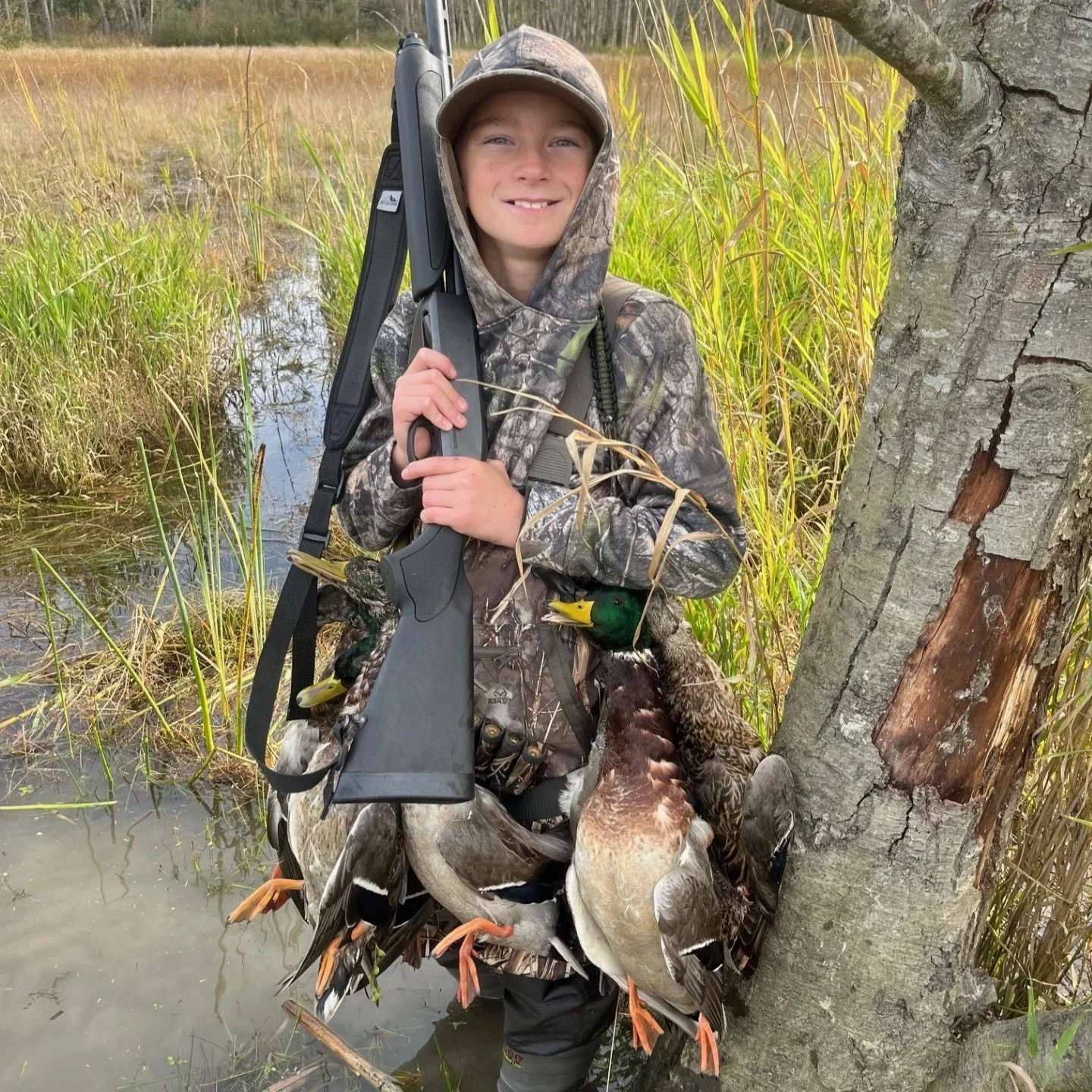
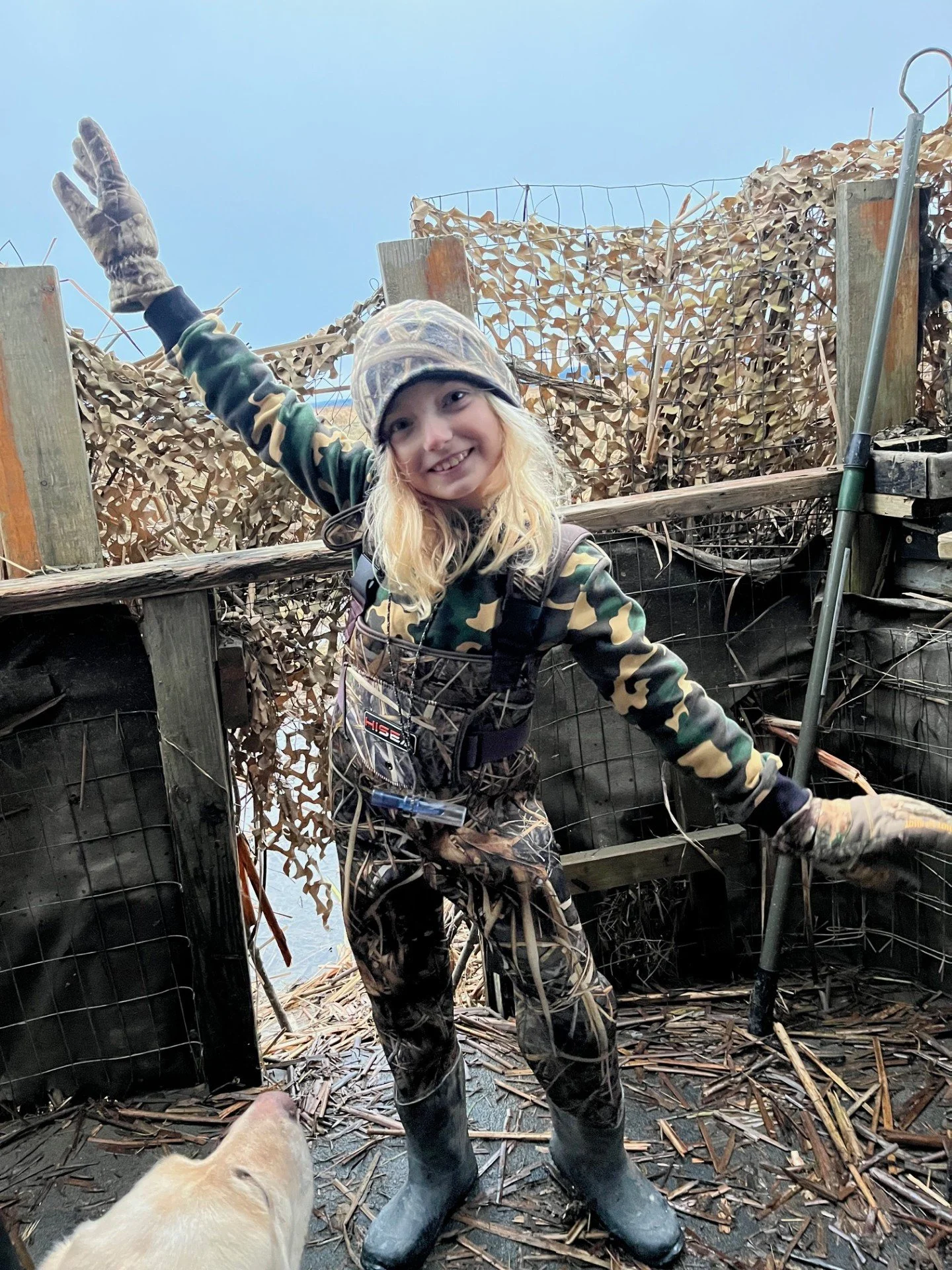
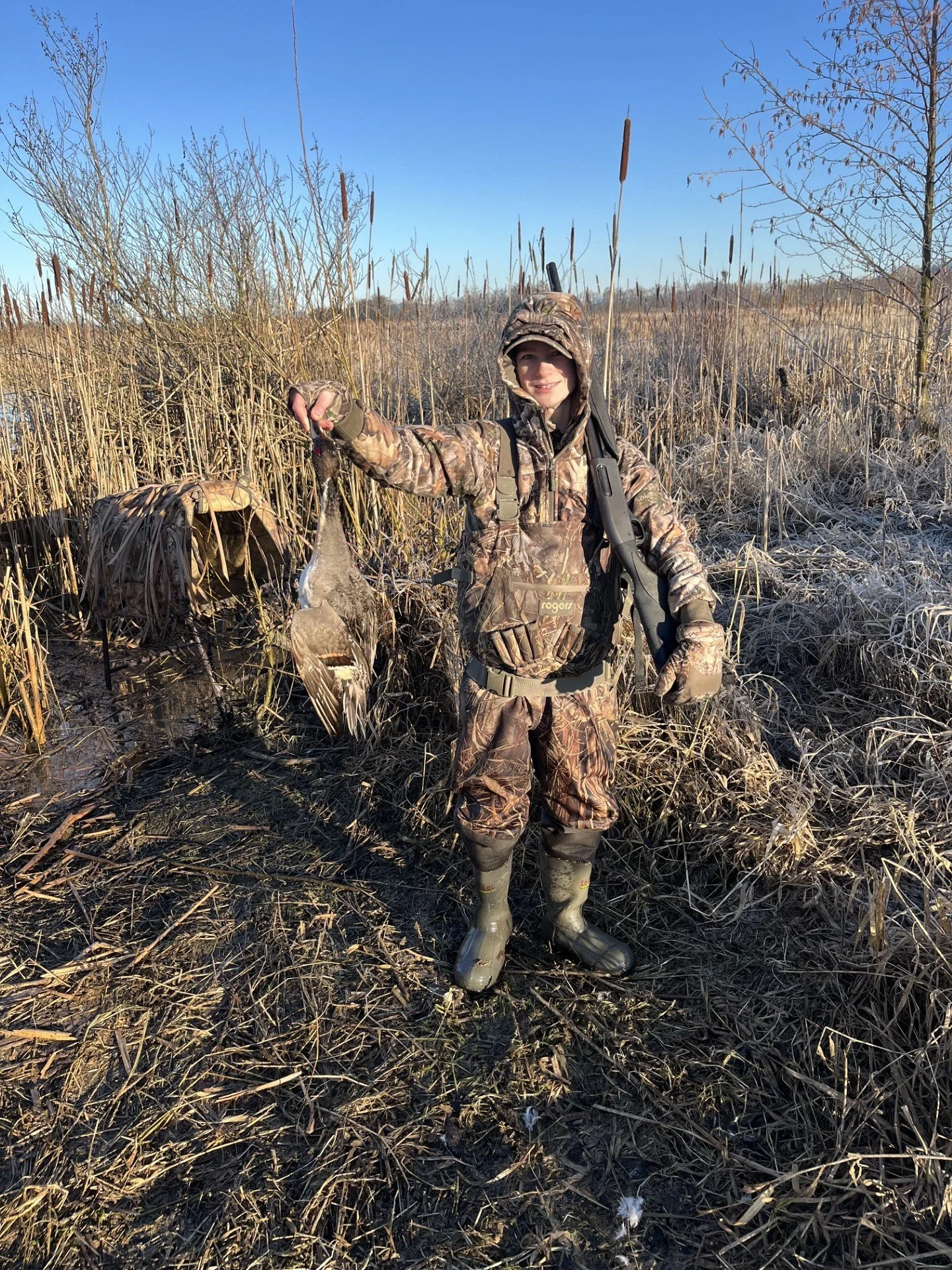
  • YES! And I’ll make an exception to the two-hunter rule if the third person is a youth — whether they’re simply tagging along to experience the hunt or they’re a young hunter wanting to participate. I’m fully supportive of getting kids into the field, and I’m happy to bring a youth along when conditions allow.

    Note: Your child must have weather‑appropriate hunting clothing and chest waders. Because kids are smaller, this may limit where we can safely go depending on water levels. I also need to know ahead of time so I can ensure the correct life jackets are onboard.

    Please understand that we may be on your child’s timeline. Kids love to talk, move, get cold, and get tired faster than adults, and that can affect how birds work and how long the hunt lasts. If your child becomes exceptionally uncomfortable or unhappy, I will end the hunt for their safety and well‑being.

    If you can schedule somebody to promptly arrive at the launch and retrieve your child in these circumstances, we can continue hunting.

  • I can breast or break down your birds entirely (breast, thighs, and wings) at a fee of $5 per bird.

    If you can, please let me know ahead of time if this is something you want so we can set aside time accordingly after the hunt.